Modern townhouse interior design balances sleek aesthetics with the practical constraints of compact, vertical living spaces. Unlike sprawling suburban homes, townhouses demand intelligent design choices that maximize both functionality and visual appeal without overwhelming cramped square footage. In 2026, today’s townhouse owners are rejecting cookie-cutter layouts in favor of personalized, purposeful interiors that reflect their lifestyle while solving real storage, lighting, and workflow challenges. Whether renovating a narrow urban unit or designing from scratch, these seven essential strategies deliver contemporary style that works as hard as it looks, turning limited space into an asset rather than a compromise.
Key Takeaways
- Modern townhouse interior design prioritizes open floor plans and vertical spaces to maximize light and create a sense of spaciousness in compact footprints.
- A restrained color palette of soft neutrals paired with strategic accents and natural materials creates sophisticated, contemporary interiors without overwhelming small areas.
- Functional, modular furniture with visible legs and clean lines ensures townhouse interiors remain uncluttered while earning their square footage.
- Layered lighting using recessed fixtures, pendants, and natural light amplifies the perceived size and livability of vertical homes far more effectively than flat overhead lights.
- Built-in storage solutions like under-stair drawers, floating shelves, and custom cabinetry eliminate visible clutter and give townhouse interiors a polished, high-end appearance.
- Modern townhouse design succeeds through intentionality—fewer, higher-quality pieces, careful measurement, and respect for structural constraints—rather than filling every corner with décor.
Embrace Open Floor Plans and Vertical Spaces
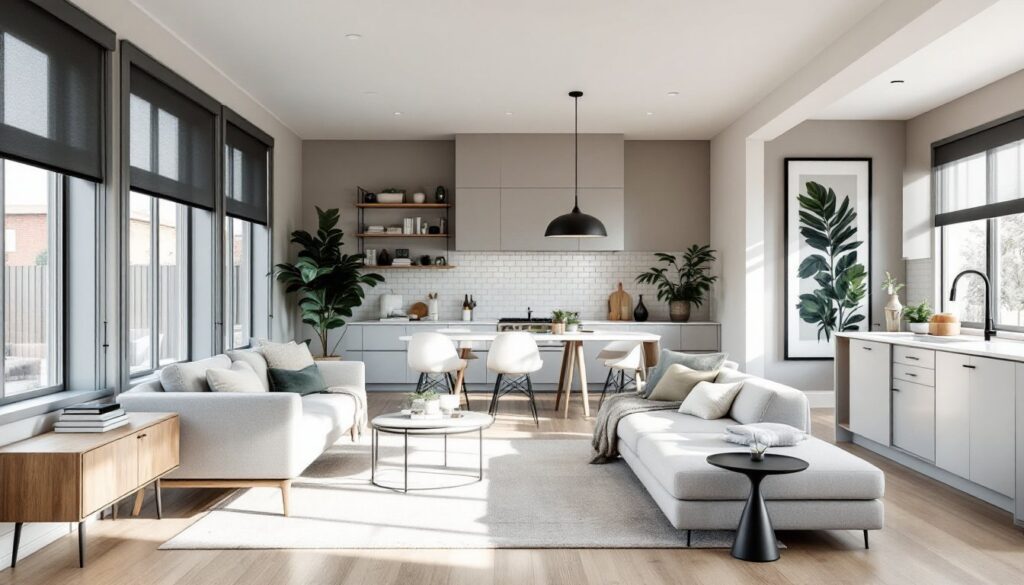
The hallmark of modern townhouse design is breaking down interior walls to create sight lines that make compact homes feel larger. Many townhouses feature a long, narrow footprint, which means opening the kitchen, dining, and living areas into a single flowing zone eliminates visual fragmentation and allows light to travel deeper into the home.
When planning an open layout, identify load-bearing walls before touching anything, this is non-negotiable. Load-bearing walls support the roof and upper floors: removing or cutting them without proper structural support is a code violation and a safety hazard. Consult a structural engineer and obtain permits: most jurisdictions require them for any wall removal in occupied homes.
Once the main floor breathes, direct attention upward. Townhouses are inherently tall: two or three stories stacked vertically offer opportunity. Use floor-to-ceiling shelving, tall plants, statement light fixtures, or artwork that draws the eye upward. Floating shelves above a sofa or kitchen pass-through add functional display without bulk. Even modest ceiling heights feel airier when vertical elements are intentional and uncluttered.
An open floor plan also means sight lines from entrance to back of home. Arrange furniture to define zones, kitchen, dining, living, without walls. A slight level change (a single step down into a sunken living area) or a kitchen island can serve as a subtle boundary that maintains openness while organizing the space.
Choose a Contemporary Color Palette and Materials
Modern townhouse interiors thrive on restrained color schemes that don’t compete with light. Soft neutrals, warm whites, light grays, warm blacks, and muted earth tones, form the foundation. This doesn’t mean bland: it means intentional.
Select a primary neutral for walls (most townhouse owners lean toward soft whites or greige, a blend of gray and beige), then add contrast through secondary colors in furniture, artwork, and fixtures. Deep charcoal accents, forest green, or navy trim work beautifully against pale walls without overwhelming a small footprint. A single jewel-tone accent wall can anchor a room, but overuse crowds the space visually.
Materials matter enormously in modern design. Prioritize natural, low-maintenance finishes that age well. Concrete or polished concrete floors in common areas feel contemporary and hide dust: they also photograph well and suit any décor. Light wood, oak, walnut, or engineered hardwood in natural tones, adds warmth. Matte finishes on cabinetry and trim (versus glossy) read as more sophisticated and hide fingerprints better in high-traffic townhouse kitchens.
Mix textures through materials rather than pattern. Exposed brick (if the townhouse has it), white subway tile, matte black metal hardware, and natural linen balance visual interest without visual noise. Avoid heavy pattern or multiple competing finishes in tight spaces: they fragment attention and make rooms feel smaller. A single geometric or botanical print can anchor a bedroom or hallway without clutter.
Prioritize Functional and Modular Furniture
Townhouse living demands furniture that earns its footprint. Off-the-shelf sectionals and oversized sofas that fit suburban family rooms will consume a townhouse living area. Instead, choose streamlined, modular pieces sized appropriately for the room.
Measure sight lines and doorways before buying anything. A sofa must fit through the stairwell or front door, seems obvious, but many townhouse owners have learned this the hard way after purchasing a beautiful piece that won’t budge. Modular sofas (like Looby systems or Article configurations) let owners customize seating to the exact footprint without replacing the entire unit later.
Multi-functional furniture is not a compromise in modern townhouse design: it’s smart strategy. A low storage bench at the foot of a bed doubles as a closet expansion and seating. A console table behind a sofa can work as a desk, dining surface, or styling perch. Nesting tables take up less visual space than traditional side tables and stack away when not needed.
Focus on scale and proportion. Furniture should have visible legs (keeps sight lines open, unlike skirted pieces that feel heavy) and clean lines. Avoid ornate or fussy details that trap dust and shrink perceived space. Natural wood tones, matte black frames, and light upholstery in linen or cotton blends suit modern interiors. Leave breathing room between pieces: a packed living room triggers claustrophobia, especially in tall but narrow townhouses.
Incorporate Smart Lighting and Climate Control
Lighting is the single biggest factor in how spacious and modern a townhouse feels. Flat, overhead fixtures scream 1990s construction: layered lighting using recessed fixtures, track lights, and statement pendants creates depth and control.
Install recessed lights on a dimmer circuit in common areas. This allows flexibility: bright task lighting for cooking or reading, softer ambiance for evenings. Pendant lights over a kitchen island or dining table add definition and visual interest without floor clutter. Sconces flanking a bathroom mirror or above a bedroom headboard reduce reliance on harsh overhead lights and add a curated, intentional feel.
Natural light is free and powerful. Large windows (or a skylight in multi-story townhouses) transform interiors. If windows are limited, mirror placement opposite light sources reflects and amplifies daylight. Window treatments should stack back cleanly when open, motorized roller shades or minimal Roman shades suit modern aesthetics better than heavy drapes that reduce perceived wall space.
Climate control ties directly to comfort and energy efficiency in vertical, multi-zone homes. A programmable or smart thermostat lets residents adjust temperatures for upper and lower floors independently. Ceiling fans are functional (they circulate air in tall rooms) and modern when selected in matte black or natural finishes. Ensure HVAC ducts are appropriately sized for the townhouse layout: undersized returns in upper-floor bedrooms trap heat and create comfort complaints that no décor can fix.
Add Texture Through Accent Walls and Decor
Modern doesn’t mean flat or boring. Texture adds sophistication without pattern overload. An accent wall, painted in a muted, deeper tone or finished with shiplap, wallpaper, or wood paneling, anchors a room and breaks monotony.
Wallpaper is trending upward in 2026 designs. Choose geometric, botanical, or abstract prints in neutral or monochromatic palettes rather than busy florals. A single accent wall of wallpaper in a entryway, powder room, or bedroom adds personality without overwhelming. Shiplap or recessed wall paneling (in white or natural wood tones) suits contemporary farmhouse and modern industrial aesthetics and is achievable for confident DIYers with a stud finder, level, and basic tools.
Decor choices should be intentional and minimal. Curated shelving, a few books, a potted plant, a framed print, feels modern. A gallery wall of 5-7 frames in matching black or natural wood frames adds visual interest to an entry or hallway. Textiles matter: a linen throw over a sofa, a wool area rug in a neutral tone, and cotton or linen curtains add warmth and absorb sound in hard-floored townhouses.
Incorporate living plants. Trailing pothos in a high corner, a fiddle leaf fig near a window, or herbs on a kitchen windowsill introduce organic texture and improve air quality. Plants don’t require square footage and read as contemporary and intentional in a modern home. They also soften the visual weight of hard finishes like concrete floors and metal hardware.
Maximize Storage With Built-in Solutions
Small townhouses live or die by storage strategy. Every closet, nook, and wall must work. Built-in solutions, shelving, cabinets, and window seats with storage, eliminate visible clutter and give the home a custom, high-end feel.
Under-stair storage is gold in multi-story townhouses. Drawers or cabinets fitted into the toe-kick of a staircase add serious capacity without eating floor space. Similarly, a window seat with lift-top storage is both seating and a concealed closet. Floating shelves in bedrooms or above a toilet create vertical storage without visual heaviness, choose open shelving sparingly (it requires constant styling), or opt for closed cabinetry in matte white, black, or natural wood finishes.
Closet systems save lives. A basic wire shelf kit ($50–$150) instantly doubles closet usable space: add matching bins or baskets and everything stays visible and accessible. In tight townhouse kitchens, pull-out pantry shelves, lazy Susans, and dividers maximize deep cabinet space that’s otherwise wasted.
Measure twice before committing to built-ins. A custom bookcase or built-in bench is permanent and must fit the exact wall dimensions, electrical outlets, and door swings. If building custom shelves, use 3/4-inch plywood or solid wood with appropriate brackets rated for the load. A shelf sagging under books’ weight looks sloppy and is a safety hazard. Paint or stain built-ins to match trim or walls: this creates seamless integration and amplifies perceived space.
Conclusion
Modern townhouse interior design isn’t about sacrifice: it’s about intentionality. Open layouts, restrained color palettes, functional furniture, layered lighting, deliberate texture, and smart storage transform compact urban homes into stylish, livable sanctuaries. Success comes from measuring carefully, respecting structural realities, and committing to fewer, higher-quality pieces and finishes rather than filling every corner. The result is a contemporary home that looks and feels significantly larger than its footprint, and works beautifully for the way people actually live today.