
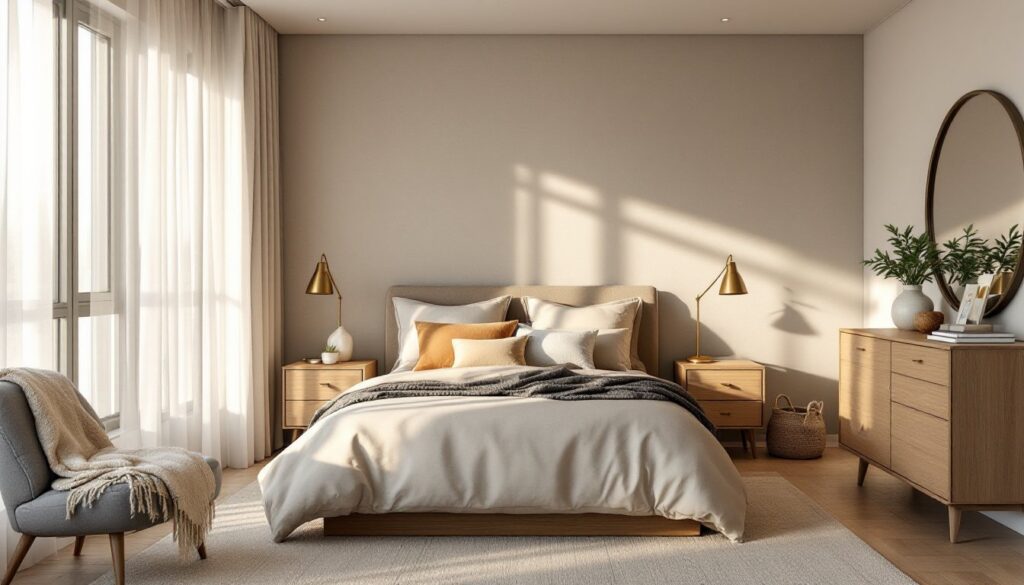
Designing a bedroom that feels both restful and personal doesn’t require a designer’s budget or a Pinterest obsession. A well-designed bedroom starts with intentional choices: picking a style that fits who you are, choosing colors that promote calm, and arranging furniture and lighting to serve both your daily routine and your need for rest. Whether someone’s refreshing a tired master suite or carving out their first grown-up bedroom, the foundation is the same, thoughtful planning before buying anything. This guide walks through the practical steps to design a bedroom that actually works, from vision to final touches.
Key Takeaways
- Define your design style and vision before shopping to create a cohesive interior bedroom design that feels intentional and works for your daily routine, not just photographs.
- A cohesive color palette with a dominant neutral, secondary color, and 1–2 accent colors prevents scattered results and makes the bedroom feel larger, calmer, or more inviting.
- Select furniture that balances form and function, with the bed taking up roughly one-third to one-half of floor space and complementary pieces like nightstands and dressers in matching finishes.
- Layer your lighting with ambient (overhead), task (bedside lamps), and optional accent lighting, ideally using warm 2700K bulbs and dimmer switches to adjust mood from energizing to restful.
- Add warmth and visual interest through natural-fiber textiles—quality bedding, layered pillows, window treatments, and area rugs—which are the easiest elements to change if your style evolves.
- Prioritize storage and declutter ruthlessly: keep only items that serve sleep, dressing, or genuine joy to ensure your bedroom feels like a restful sanctuary, not a storage closet.
Define Your Design Style And Vision
Before shopping or scrolling inspiration boards, get clear on what style actually resonates. Is the goal a minimalist sanctuary, a cozy farmhouse retreat, a modern industrial space, or something else entirely? Spend time looking at rooms that feel right, save photos, notice patterns in what appeals.
The key is picking a style that someone can live with day-in and day-out, not just photograph once. A bedroom’s primary job is function: sleep, dressing, perhaps work or reading. A beautiful room that doesn’t support those activities will feel off every morning.
Once a style direction emerges, use it as a filter for every decision that follows, furniture silhouettes, material choices, color direction, and accessories. This prevents the “decorating at random” trap where a room ends up feeling scattered. A clear vision keeps choices coherent.
Choose A Cohesive Color Palette
Colors set the mood and can make a room feel larger, cozier, or more energizing. A cohesive palette typically includes a dominant neutral (walls), a secondary color (accent walls, larger pieces), and 1–2 accent colors (accessories, textiles).
Neutrals like soft grays, warm whites, warm beiges, and soft greens have staying power, they won’t feel dated next year. If someone wants personality, they layer it in with textiles and décor rather than bold wall paint, which is easier to change than repainting.
Warm whites and creams tend to feel inviting: cool grays feel modern and calm. Greige (gray-beige blend) is neutral but warm. Consider the room’s natural light: north-facing rooms benefit from warmer tones to avoid feeling cold. South-facing rooms with strong light can handle cooler colors without feeling harsh.
Paint a large swatch on the wall and live with it for a few days under different lighting. What looks great in the store might feel too bold at night.
Select Furniture That Balances Form And Function
Bedroom furniture is a big investment and should earn its place. Start with the essentials: a bed frame appropriate to mattress size (queen, king, twin), a nightstand per sleeper, and dresser or closet storage. Add seating (bench, chair, or reading nook) only if the room is large enough that it doesn’t block the pathway or dwarf other pieces.
Furniture scale matters enormously. A bed that’s too small for the wall makes a room feel empty: one that dominates a small bedroom makes it feel cramped. A general rule: the bed should take up roughly one-third to one-half of visible floor space.
Choose a bed frame that fits the style. A simple platform or slatted frame works for most aesthetics. Avoid pieces with unnecessary ornamentation if clean lines are the goal. Nightstands should be roughly the same height as the mattress top (usually 24–28 inches) so reaching a lamp or phone is comfortable.
Dressers serve double duty: storage and visual balance. A tall dresser with a mirror can anchor a wall: a lower dresser pairs well with a large headboard wall. Match wood tones or finishes to keep the space feeling intentional, not like pieces from different apartments happen to share a room.
Layer Your Lighting For Ambiance And Practicality
Good bedroom lighting has three layers: ambient (overhead or ceiling fixture), task (bedside lamps for reading), and accent (optional accent lights for mood). Rely solely on overhead light and a room feels harsh: skip ambient light and evenings become awkward.
Bedside lamps should be positioned so light falls on a book or phone without glaring directly at the other sleeper. Lamps with adjustable arms or 3-way bulbs offer flexibility. Nightstands aren’t always positioned symmetrically (especially in smaller rooms), so don’t force a matching pair if one side works better.
Ceiling fixtures can be recessed lights, a flush mount, or a chandelier depending on style. Dimmer switches are worth the electrical work, they let someone adjust mood from energizing to sleepy without replacing fixtures. LED bulbs now come in warm (2700K) to cool (4000K+) color temperatures: bedroom lighting typically benefits from warm tones of 2700K.
Avoid placing the bed directly under an overhead light, as it feels institutional. If that’s unavoidable in a small room, a dimmer makes it tolerable.
Add Texture And Visual Interest With Textiles
Textiles, bedding, curtains, area rugs, throw blankets, add warmth and prevent the room from feeling sterile. They’re also the easiest elements to change if the mood shifts later.
Bedding quality affects sleep comfort and longevity. Natural fibers like cotton, linen, and wool are breathable and durable. Aim for 300+ thread count cotton for softness without inflated prices. Linen wrinkles naturally and is fine for casual aesthetics: it’s less forgiving for buttoned-up looks.
Layering bedding, fitted sheet, flat sheet, duvet or comforter, and decorative pillows, creates visual interest and lets someone adjust warmth seasonally. Throw pillows in varying textures (linen, velvet, knit) add dimension without bulk.
Window treatments control light, sound, and privacy. Sheer curtains diffuse morning light: blackout linings block it entirely. Flat panels or Roman shades suit minimalist styles: fuller drapes feel traditional. Pairing lightweight sheers with heavier panels gives flexibility.
An area rug anchors the space and softens hard floors. A 5×7 or 6×9 foot rug beneath or slightly under the bed defines the sleeping area without eating the whole floor.
Optimize Storage And Declutter Your Space
A bedroom that doubles as a junk closet isn’t restful. Before buying storage, audit what actually lives there: seasonal clothing, bedding, shoes, accessories, work items that leaked in. Then size storage accordingly.
Dressers, closet systems, under-bed containers, and floating shelves distribute storage so nothing dominates. Under-bed storage works well for off-season items in slim, labeled containers. Floating shelves keep walls clean and visual while offering spots for books, photos, or plants.
Closet organization doesn’t require expensive systems. Slim velvet hangers free up rod space: shelf dividers prevent topples: clear bins let people see contents without opening them. Good lighting inside the closet, a battery LED strip costs under $20, makes morning dressing faster.
The golden rule: if it doesn’t serve sleep, dressing, or genuine joy, it doesn’t belong in the bedroom. Remove work items, excess décor, and anything waiting to be donated or repaired. A calm room feels protective, not burdensome.
Conclusion
Designing a functional, beautiful bedroom boils down to starting with a clear vision, choosing a cohesive color palette, selecting appropriately scaled furniture, layering lighting thoughtfully, adding textiles for warmth, and ruthlessly decluttering. Each decision builds on the previous one, creating a space that feels intentional rather than assembled haphazardly. The result isn’t a showroom: it’s a personal sanctuary where the owner actually wants to spend time. Begin with vision, prioritize function, and let aesthetics follow naturally.