Walking into a well-designed bakery should feel like stepping into a space crafted just for indulgence. Bakery interior design isn’t about luxury finishes or high-end décor, it’s about intentional choices that draw customers in, keep them engaged, and make them feel the quality of your products before they even taste them. The best bakeries understand that every visual cue, scent, and surface communicates something about the brand. From warm color palettes to strategic lighting, thoughtful layout to sensory engagement, these design elements work together to create an experience customers want to repeat. Whether you’re opening a new shop or refreshing an existing space, the fundamentals of bakery interior design remain consistent: build trust, showcase products, and make the environment feel inviting and authentic.
Key Takeaways
- Bakery interior design uses warm color palettes, strategic lighting, and thoughtful layout to build customer trust and showcase product quality before purchase.
- Warm LED lighting at 2700K–3000K flatters baked goods, while overhead fluorescent lights make pastries appear unappealing and should be avoided.
- Durable, cleanable flooring materials like sealed porcelain tile or matte polished concrete communicate quality and handle moisture, flour, and high traffic effectively.
- Open display cases with tiered shelving and internal accent lighting create visual interest, reduce friction, and help customers see product freshness and variety.
- Fresh-baked scent from visible ovens or on-site baking is the most powerful sensory tool in bakery interior design, triggering appetite and emotional connection.
- Smart floor plan flow—with display cases visible upon entry and clear sightlines from seating—prevents congestion and keeps customers engaged with your products.
Color Psychology and Wall Finishes
Color sets the emotional tone before a customer buys anything. Warm neutrals, cream, soft beige, and warm gray, create comfort and appetite appeal in bakeries. These colors complement the golden tones of baked goods and photographs well on social media, which matters for bakery marketing. Avoid sterile whites or clinical grays: they work against the handmade, artisanal impression most bakeries want to project.
Accent walls in soft terracotta, muted sage green, or warm taupe add depth without overwhelming the space. These tones signal approachability and warmth, key emotional drivers in bakery design. Consider your product line when choosing: if you specialize in dark rye or chocolate croissants, darker accent walls frame those products beautifully. For pastry-focused operations with light, delicate offerings, lighter walls make sense.
Finish matters as much as color. Flat latex paint hides imperfections but marks easily in a high-traffic area. Satin or eggshell finishes resist moisture and are cleanable, practical in a kitchen-adjacent space where steam and flour dust are constant. Avoid glossy finishes: they feel commercial and institutional. If you’re thinking about murals or textured finishes, keep them subtle: hand-painted bakery scenes can feel kitschy fast. Focus on clean, well-maintained finishes that let your products be the visual hero.
Lighting Design for Warmth and Product Appeal
Lighting in a bakery does two critical jobs: it flatters your products and creates ambiance. Overhead fluorescent lighting is the enemy, it casts blue-white tones that make pastries look tired and unappealing. Instead, layer lighting with warm LED fixtures at 2700K to 3000K color temperature. This range mimics warm incandescent bulbs and makes baked goods appear golden, fresh, and appetizing.
Focused accent lighting above display cases is essential. Use dimmable track lights or recessed fixtures aimed directly at product shelves, highlighting depth, texture, and color variation in your offerings. Seating areas benefit from softer, ambient light, pendant fixtures or wall sconces create an intimate feel that encourages customers to linger. Avoid harsh, uniform brightness that makes the space feel like a warehouse.
Natural light is a bonus if your layout allows for it, but windows need treatment. Direct sunlight can fade products, melt chocolate, and create harsh shadows. Sheer roller shades or diffused glazing softens incoming light while preserving the outdoor view that many customers find appealing. Test your lighting at different times of day: what looks warm and inviting at opening time might feel dim by afternoon if you don’t layer brightness strategically.
Display Cases and Product Presentation
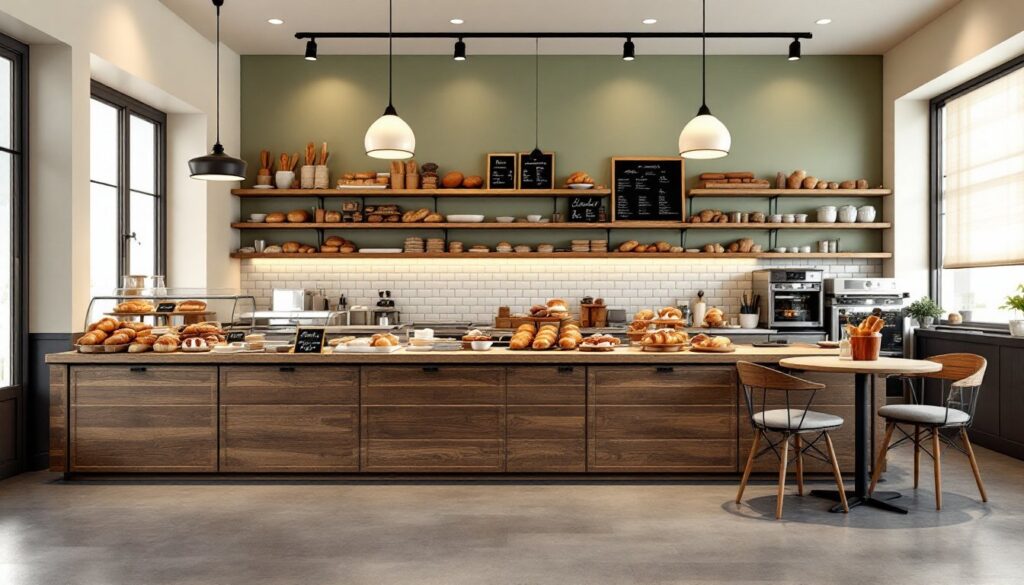
Display cases are where customers decide what to buy, so they deserve real investment. Open shelving shows abundance and builds trust, customers see the freshness and variety. Use tiered shelving or risers to create visual interest and ensure every product is visible without reaching too high or bending too low. Arrange items by category (croissants here, donuts there, loaves in this section) rather than random placement: it feels intentional and helps customers find what they want.
Material choice matters. Reclaimed wood shelves in warm stains feel artisanal and pair beautifully with white subway tile backing or soft-colored walls. Metal frames with glass shelves read as modern and clean, practical for a contemporary bakery brand. Avoid plastic or cheap laminate: it contradicts the premium, handcrafted message bakeries typically send.
Display case lighting is non-negotiable. Internally lit refrigerated cases with warm LED tubes show off croissants, éclairs, and filled pastries without sacrificing product integrity. Open shelves need overhead accent lights or integrated LED strip lighting beneath each tier. Dirt and oil residue on glass and shelves destroy the visual impact, daily cleaning is part of the design strategy, not an afterthought. Finally, consider signage placement: small chalkboard labels or printed cards at eye level showing product names, ingredients, and price reduce friction at the counter and tell your story.
Flooring Materials and Durability
Bakery floors take a beating: flour dust, water, oils, foot traffic. They need to be durable, cleanable, and somewhat forgiving aesthetically. Porcelain tile (at least 18″ × 18″) is the industry standard, it’s slip-resistant when sealed, resists staining, and handles moisture without swelling. Matte finishes hide dust and flour better than glossy tiles, and mid-gray or warm beige tones work with almost any color scheme.
Matte polished concrete is increasingly popular in contemporary bakeries: it reads as modern and industrial. Concrete needs proper sealing and regular maintenance, but it photographs well and supports the artisanal brand narrative. Sealed, finished concrete can handle moisture if drainage is addressed during installation, a critical consideration if your bakery has an open kitchen or active prep area.
Avoid pure granite or marble: they’re slippery when wet and overly formal for a neighborhood bakery. Vinyl plank flooring might seem affordable, but it doesn’t convey the quality message customers expect, and repeated moisture exposure causes swelling and failure. Grout lines in tile should be minimal (use epoxy grout, not sanded, to prevent staining) and kept sealed. Rugs and mats break up hard floors, improve customer comfort during longer visits, and reduce fatigue for staff, but they also collect flour. Use removable, easily washable mats in seating areas and behind the counter where staff stands for hours.
Seating and Customer Flow
Not every bakery needs seating, but if you offer coffee, pastries, and a reason to stay, layout becomes critical. Design the space so the counter and pastry cases are the clear focal point when customers enter. Seating should feel secondary, it encourages lingering without pressuring takeout customers or creating bottlenecks at the register.
Small, round or café-style tables (24″ to 30″ diameter) work better than long communal benches for most neighborhood bakeries: they feel intimate and scale well in tight spaces. Mix table heights and seating types, a bar along a window, a mix of chairs and stools, perhaps a small lounge corner, to accommodate different customer preferences. Ensure clear sightlines from seating to the display cases: customers want to see what’s available and feel connected to the action.
Floor plan matters enormously. The pastry display should be visible and accessible immediately upon entry, not hidden around a corner. The counter and register come next in the flow. Seating should be positioned so the view is of the bakery interior or outside, not a blank wall. If your space is tight, prioritize high-turnover countertop seating over table seating. Wide aisles (at least 36″ minimum) prevent congestion and frustration. A one-way traffic pattern or clear left-to-right flow prevents collisions and makes the space feel organized, not cramped.
Scent and Sensory Branding
Scent is the most powerful tool in bakery interior design, yet it’s often overlooked. The smell of fresh bread or baking chocolate triggers appetite, nostalgia, and emotional connection, sometimes more powerfully than visuals. If possible, position your bakery’s scent source visible to customers: they want to know the smell is real, not artificial air freshening.
Fresh-baked scent is your competitive advantage if you bake on-site. Open kitchen design or a visible prep area amplifies this. If you’re primarily retail or wholesale, even a small in-store bakery section with visible ovens signals authenticity. Avoid artificial vanilla or sugar-cookie fragrance sprays: they cheapen the brand and often overwhelm.
Maintain scent consistency through the day. Morning baking sessions flood the space with authentic aroma, but by afternoon, as that fades, the interior can smell stale. Small batch baking, frequent oven use, or subtle oven-safe fragrance elements (like vanilla beans in a warm spot) can sustain the sensory experience. Keep the air fresh with proper ventilation, stale air smells closed-off and sterile, the opposite of what a bakery wants. Consider it part of your overall sensory branding strategy: scent + warm lighting + color + music (if used) creates a complete sensory environment that makes the bakery memorable and worth returning to.
Conclusion
Bakery interior design succeeds when every element reinforces the core message: quality, freshness, and approachability. Color, light, materials, and sensory cues work together to build trust and create an experience customers remember. Start with the fundamentals, warm colors, proper lighting, durable flooring, and thoughtful layout, then add personality through materials, display presentation, and scent. The goal isn’t a Pinterest-perfect showroom: it’s a welcoming space where customers feel the care you put into your craft before they ever take a bite.