Baroque interior design brings old-world opulence into modern homes, think rich jewel tones, ornate mirrors, dramatic drapery, and gilt-edged accents that catch the light. Unlike minimalist trends that dominate contemporary design, baroque celebrates abundance, layering, and theatrical flair. Homeowners considering a baroque aesthetic often worry it’ll feel stuffy or dated, but done thoughtfully, the style creates inviting, sophisticated spaces that make a statement. This guide walks through baroque fundamentals, material choices, furniture placement, and lighting strategies that work in today’s homes, helping DIYers and design enthusiasts add baroque drama without overdoing it.
Key Takeaways
- Baroque interior design celebrates opulence through jewel tones, ornate mirrors, and dramatic textures without requiring a complete home renovation.
- Start with one focal point—such as a statement mirror, accent wall, or ornate crown molding—then layer lighting and accessories to build baroque drama thoughtfully.
- Rich color palettes (deep burgundy, forest green, sapphire blue) paired with metallics and velvet upholstery create the theatrical sophistication that defines modern baroque style.
- Curved furniture, patterned rugs, and layered textiles (damask pillows, floor-to-ceiling drapery, fringed throws) add collected, lived-in luxury to contemporary homes without feeling dated.
- Lighting is crucial to baroque’s impact—use crystal chandeliers, ornate wall sconces, and dimmers set to warm color temperatures (2700K) to mimic candlelit intimacy.
- Quality baroque-inspired pieces are accessible at mainstream price points ($40–$1,200 for elements like fabric panels, rugs, and statement furniture), making the style attainable for DIYers and design enthusiasts.
Understanding Baroque Style Fundamentals
Baroque originated in 17th-century Europe as a reaction against Renaissance restraint, it’s intentionally bold, sensual, and unapologetically luxurious. The style emphasizes curves, asymmetry, rich colors, and ornamental excess. Unlike contemporary baroque (which mixes old and new), authentic baroque leans into historical references: carved wood, plush fabrics, sculptural forms, and layers of visual interest.
The key to adapting baroque for a modern home is knowing what to emphasize and what to edit. A full baroque room with every wall gilded and every surface ornate feels museum-like and exhausting. Instead, choose focal points, a dramatic accent wall, an ornate mirror, or a statement piece of furniture, and let restraint in other areas breathe room into the space. Think of baroque as a design language you’re translating into 2026, not a historical recreation. The bones of the style remain: jewel tones, curves, theatrical lighting, and layered textures that create depth and warmth.
Key Design Elements and Materials
Color Palettes and Wall Treatments
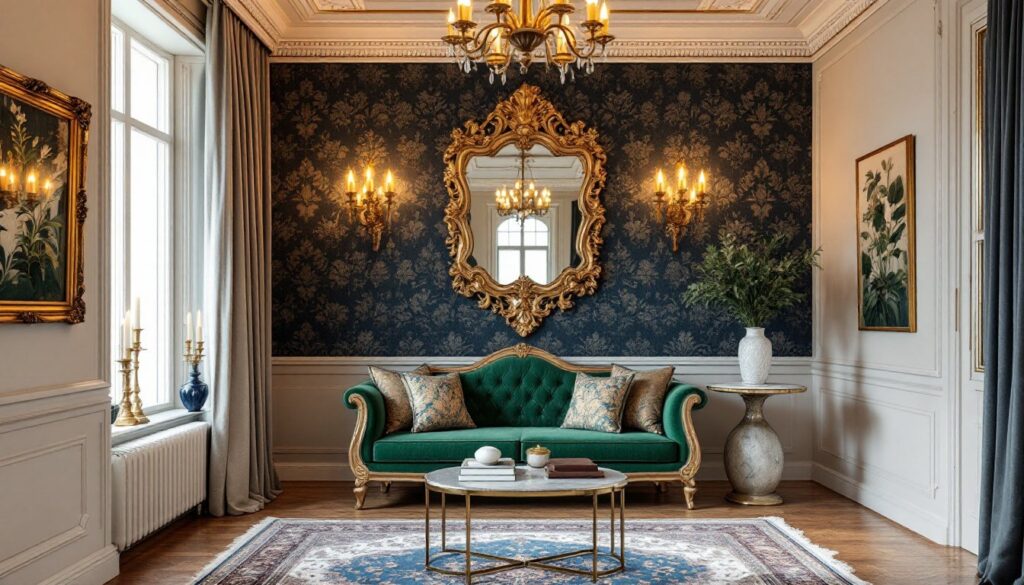
Baroque color schemes are rich and saturated. Deep burgundy, forest green, sapphire blue, and cream form the historical backbone, often paired with metallics (gold, bronze, or silver accents). Jewel tones aren’t the only option, deep plum, charcoal, and even black create moody, sophisticated backdrops that feel contemporary while honoring baroque sensibility.
For walls, consider damask or floral wallpaper as a quick way to add pattern and texture without structural changes. Removable peel-and-stick options (brands like Spoonflower or Tempaper) work well for renters. If painting, flat or matte finishes in deep colors absorb light, creating intimacy: paired with lighter trim, the contrast is striking. Alternatively, a single accent wall in deep jewel tone with the remaining walls in cream or taupe keeps the space balanced.
Texture matters: velvet upholstery, damask fabrics, faux marble wallpaper, and flocked surfaces add tactile richness. Fabric wall panels (batting-backed linen or velvet mounted to frames) create soft, elegant focal points without permanent drywall changes. Sourcing these from home décor retailers or online fabric suppliers costs $40–$150 per panel depending on size and material grade.
Ornamental Details and Fixtures
Baroque celebrates decorative hardware, mirrors, and applied ornament. Ornate mirrors with gilded or carved wood frames are essential, they reflect light, enlarge space visually, and serve as statement pieces. A large ornate mirror above a mantel or console table anchors a room instantly. Expect to spend $100–$400 on a substantial vintage or reproduction baroque mirror.
Carved wooden molding, corbels, and appliqués add architectural interest without major renovation. Crown molding with baroque profiles (egg-and-dart, dentil, or acanthus leaf details) transforms plain ceilings. MDF versions are affordable ($2–$8 per linear foot) and paintable: hardwood options run higher but age beautifully. Installation requires a miter saw, caulk, finish nails, and basic carpentry skills, or hire a trim carpenter for $50–$100 per hour.
Gilt accents and metallics come through hardware, picture frames, wall sconces, and decorative objects. Gold-leafed frames, bronze doorknobs, or brass candlesticks catch light and elevate a space. Mix metallics intentionally: pairing warm gold with cool silver creates visual interest rather than looking accidental.
Furniture Selection and Placement
Baroque furniture features curved lines, cabriole legs, carved details, and plush upholstery. A low-back velvet sofa in burgundy or emerald becomes an instant focal point: pair it with ornately carved wooden occasional tables or a marble-topped side table. Statement pieces don’t need to be authentic antiques, quality reproductions from mainstream furniture retailers offer the look at accessible price points ($600–$1,500 for a substantial sofa versus $3,000+ for vintage).
Placement follows baroque’s theatrical nature: arrange furniture to create conversation zones rather than floating pieces against walls. A chaise lounge angled toward a fireplace, a carved console table anchoring an entryway, or an upholstered wingback chair beside a window invites use and creates visual drama. Baroque rooms typically feel layered and occupied, not sparse.
Area rugs add color, define zones, and soften hard floors. A Persian or Turkish rug with traditional patterns (or a modern reproduction) in jewel tones anchors living spaces. Size matters: for a seating area, ensure the rug extends under front furniture legs so it feels intentional, not undersized. Expect $300–$1,200 for a quality 8×10 hand-knotted or well-made machine-loomed rug.
Storage solutions should look intentional, not utilitarian. A carved wooden cabinet, a mirrored credenza, or a velvet-upholstered ottoman with storage serves dual purposes, function plus design. Avoid flat-pack minimalist shelving: baroque thrives on pieces with presence.
Lighting and Accessory Styling
Lighting is crucial to baroque’s theatrical impact. A crystal or brass chandelier above a dining table or in an entryway creates focal-point drama. Ornate wall sconces flanking a mirror, above a vanity, or framing a fireplace add task lighting while reinforcing the aesthetic. Edison-bulb fixtures with warm color temperature (2700K) mimic candlelit intimacy baroque originally relied on.
Layering light sources, overhead fixture, wall sconces, table lamps with ornate bases, and candles, creates depth and allows mood adjustment. A dimmer switch on ceiling fixtures adds flexibility: most baroque spaces benefit from softer light levels than contemporary interiors demand.
Accessories finish the story. **Decorative objects, porcelain figurines, brass candlesticks, leather-bound books, ornate picture frames, vintage mirrors, ** clustered on shelves, mantels, and side tables add richness without clutter. Grouping odd numbers (three candlesticks, five framed photos) feels intentional and baroque. Heavy drapery, floor-to-ceiling velvet curtains in deep tones with ornate rods and tasseled tie-backs, frames windows theatrically and adds insulation.
Textiles tie everything together: throw pillows in damask, velvet, or brocade, layered on sofas and chairs: a fringed throw blanket over a chaise lounge: heavy curtains in jewel tones or patterned fabric. A single statement pillow in gold brocade or embroidered velvet costs $30–$80 and instantly elevates a basic sofa. Candles in ornate holders, fresh flowers in classical vases, and dark framed artwork (botanical prints, portraits, or landscape paintings) complete the layered, collected aesthetic that defines modern baroque.
Conclusion
Baroque interior design doesn’t require a complete renovation, it’s about strategic choices: one jewel-toned accent wall, a statement mirror, ornate crown molding, and layered lighting and accessories. Start with a focal point (fireplace, entryway, or primary bedroom), add rich color and texture, then build outward. The style rewards curation and drama, inviting homeowners to express personality and sophistication in spaces that feel collected, lived-in, and unmistakably luxurious.