
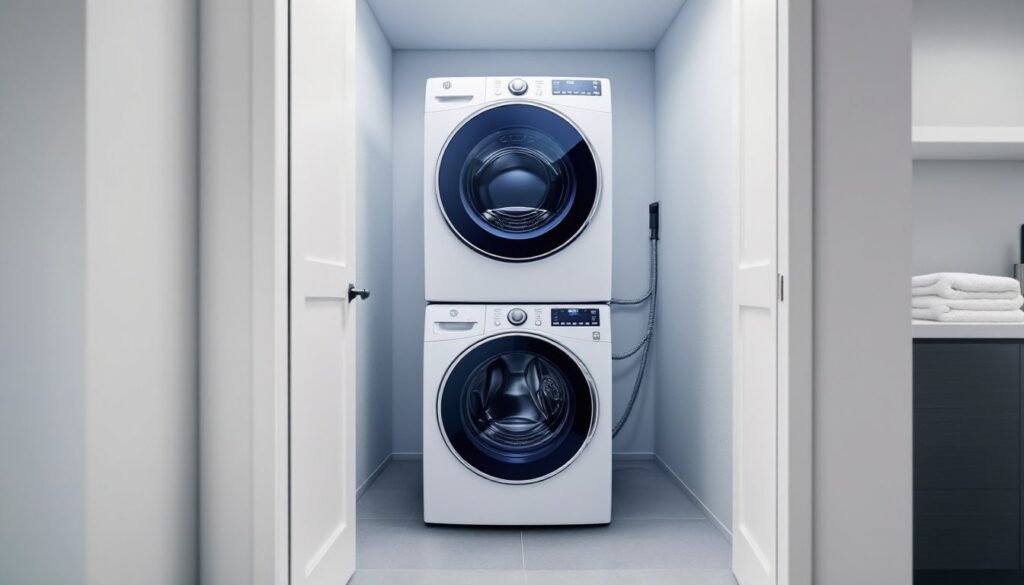
Apartment dwellers, tiny-house owners, and anyone tired of juggling a full laundry room in a cramped hallway know the real estate problem: washers and dryers eat square footage. GE stackable washer and dryer units solve that bottleneck by stacking the dryer directly on top of the washer, a setup that halves the footprint while delivering solid washing and drying performance. If space is tight but laundry isn’t shrinking, a stackable unit from GE offers a practical middle ground between coin laundromats and a sprawling utility room. This guide walks through what sets GE’s lineup apart, which models fit different budgets and needs, and what to expect before you install one in your home.
Key Takeaways
- GE stackable washer and dryer units cut laundry room footprint in half by stacking the dryer on top of the washer, making them ideal for apartments and small spaces.
- Most 2026 GE stackable models feature ENERGY STAR certification, using 20% less water and energy than federal minimums and saving $50–$120 annually on utility bills.
- GE stackables offer versatile installation options with both electric and gas dryer choices, WiFi-enabled controls, sensor drying, and automatic cycle detection for convenience and efficiency.
- Entry-level GE stackable units start around $700–$900, while mid-range models range from $1,200–$1,600, with break-even payoff occurring over 8–15 years through durability and energy savings.
- Before purchasing, confirm your space can accommodate the 27–28 inch wide, 75–85 inch tall stacked footprint and verify venting, water hookup, and doorway access options.
What Makes GE Stackable Units Stand Out
GE stackable units aren’t just smaller versions of full-size machines, they’re engineered for efficiency and reliability in tight quarters. The company has spent years refining the thermal dynamics of stacked dryers (heat management matters more when a dryer sits directly above a hot-water washer) and building washer tubs that handle regular family loads without occupying a corner of the basement.
One key advantage is versatility. Many GE stackable models offer both electric and gas dryer options, so you’re not locked into venting or ductwork limitations. The washers typically feature variable water-level controls and automatic detergent dispensing, features that skip the guesswork and reduce detergent waste. GE also backs most stackable units with strong warranty coverage (usually 1 year full coverage, with extended protection options), which matters when a repair means servicing both machines at once.
The reputation for durability in GE’s stackable range stems from using fewer moving parts in the wash cycle and more straightforward drum designs compared to some competitors. This translates to fewer service calls down the line, a real consideration if you’re betting on a stacked unit lasting 8–12 years.
Key Features And Technology
GE’s current stackable lineup emphasizes convenience and connectivity. Most models come with WiFi-enabled controls, letting you start, pause, or monitor a load from a smartphone. This sounds gimmicky until you’re running errands and realize you left a load of damp clothes sitting, now you can run a refresh cycle remotely.
Other standard features worth noting:
- Automatic cycle detection: The washer senses load size and fabric type, adjusting water and detergent accordingly.
- Dual-action wash systems: Combines agitation and tumbling to handle delicate silks and heavy cottons on different cycles.
- Sensor drying: The dryer measures moisture levels and shuts off when clothes are dry, cutting energy use and wear on fabrics.
- Steam options: Some models include a steam cycle to freshen clothes without a full wash, useful for lightly soiled items.
For the dryer half, thermal barrier insulation keeps heat from radiating back into the laundry room, a practical detail if the stack lives in a bedroom or office closet. Noise levels on newer GE stackables hover around 72–78 decibels for washers and 70–75 for dryers, not silent, but quieter than older models or discount brands.
Comparing Different GE Stackable Models
GE offers stackables across several price tiers, each with different footprints and capacity. The entry-level models (around 4.5 cubic feet for washer, 3.8 for dryer) work well for individuals and couples: they’re tight for a family of four but doable. Mid-range units jump to 4.8–5.0 cubic feet on the washer side, which handles an extra bedsheet set or two per load. Premium models max out around 5.2 cubic feet.
Capacity matters more than specs suggest. A 5.0 cu ft washer on the GE site fits 1 queen comforter per load: if your household generates daily laundry plus monthly bedding washes, you’ll cycle the machine more often. By contrast, a 4.8 cu ft washer handles 7–8 pairs of jeans or a full week of casual clothes in one go.
On the dryer side, GE stackables use gas and electric heating options. Gas dryers (if you have a gas line available) dry slightly faster and cost less per load to operate: electric models are simpler to vent and don’t require a gas technician for installation. Both heat types in GE’s stacks incorporate sensor drying to prevent overdrying.
Pricing: Entry-level GE stackables run $700–$900, mid-range $1,200–$1,600, and premium units $1,800–$2,400. Regional availability and sales cycles shift these figures, but the gaps reflect dryer efficiency rating, washer capacity, and software features like WiFi and advanced cycles.
Energy Efficiency And Cost Savings
GE stackables carry ENERGY STAR certification on most 2026 models, which means they use at least 20% less water and energy than federal minimums. A certified washer cuts water use to around 13–15 gallons per load versus 27+ for older machines. That adds up fast in households running 6–8 loads a week.
The dryer side matters equally. Sensor drying prevents the “dried into crispy rags” scenario and saves energy by shutting off once moisture is gone rather than running a preset timer. Over a year, an ENERGY STAR dryer can save roughly $50–$120 on electric or gas bills, depending on local rates and load frequency.
Break-even math: If a GE stackable costs $1,200 and saves $80 annually on utilities, you’re looking at a 15-year payoff horizon, not instant, but it’s there. Many regional utility companies offer rebates (often $50–$200) for ENERGY STAR washers and dryers, which tighten the payback window. Check your local utility’s rebate program before purchase.
Installation And Space Considerations
Before buying, measure your installation space carefully. A standard GE stackable footprint is roughly 27–28 inches wide, 42–44 inches deep, and 75–85 inches tall when stacked. That’s taller than most doorways, which means the units must be delivered in separate boxes and assembled in place or snaked through tight hallways before stacking.
Venting the dryer is non-negotiable. Electric dryers need a 120V or 240V outlet (check your model specs) and a vent duct to an exterior wall or roof. Gas dryers require a gas line, a vent, and proper grounding. If your laundry closet is interior with no exterior access, venting becomes complicated, you’ll need a vent kit that runs through walls or ceilings, which may require opening drywall and possibly a permit depending on local codes.
Water hookups are straightforward: hot, cold, and a drain. Most GE stackables come with inlet hoses, but verify the length matches your plumbing distance. If the washer sits 10+ feet from your water lines, longer hoses or a relocating plumber visit may be necessary.
Pro tip: Stack the washer on the bottom. It’s heavier (especially when full) and easier to load from a lower position. Stacking the dryer on top reduces back strain when transferring wet clothes. Many installers position the pair perpendicular to the wall if space allows, making loading and unloading more ergonomic in a tight closet.
User Experience And Reliability
Owners of GE stackables consistently report straightforward operation and minimal downtime. The control panels use clear icons and touchscreen displays (on newer models), reducing the learning curve. Self-cleaning washer drums on premium units mean less mildew smell, a real quality-of-life improvement in humid climates.
Reparability is crucial for stackables. Since the dryer sits on top, removing it for service requires unbolting and lifting, which is possible but awkward. GE parts are widely available through online retailers and local appliance shops, and repair technicians are familiar with the units. Expect labor costs of $150–$300 per service call, plus parts.
Common issues reported in reviews: occasional WiFi connectivity dropouts (usually a router placement problem, not a GE flaw) and inlet valve failures after 6–8 years (preventable with inlet screens and water quality filtration). These aren’t deal-breakers, but they’re worth factoring into your decision if you’re aiming for hands-off operation.
Reliability metrics from consumer reports and warranty claim data show GE stackables in the middle-to-upper tier, not perfect, but better than discount brands and roughly on par with LG and Samsung equivalents.
Conclusion
GE stackable washer and dryer units deliver practical, space-efficient laundry solutions without forcing you into a coin laundromat or oversize utility closet. The combination of solid build quality, connectivity features, and competitive pricing makes them a smart choice for space-conscious households. Before committing, verify your venting options, doorway clearance, and water/gas hookup feasibility. The right stackable unit pays for itself through durability and efficiency while reclaiming precious square feet, a win most DIYers and tight-quarters dwellers can appreciate.