Y2K interior design is having a major moment right now, and it’s not just nostalgia talking. This aesthetic, rooted in the optimistic, tech-forward vibes of the late 1990s and early 2000s, blends chrome, neon accents, sleek curves, and playful color blocking to create spaces that feel both retro and contemporary. Unlike pure ’70s or ’80s revival, Y2K design nods to a specific cultural moment when the future felt shiny and full of possibility. For homeowners looking to refresh their interiors without going full maximalist or committing to trendy pastels, Y2K offers a genuine design language with staying power. The approach works especially well when applied selectively, think accent walls, statement furniture, or a redesigned bedroom or home office rather than an entire house overhaul.
Key Takeaways
- Y2K interior design blends chrome, neon accents, curved furniture, and bold color blocking to create spaces that feel both retro and contemporary without requiring a full home overhaul.
- The core color palette combines silver, white, or pale gray neutrals with bold accent colors like hot pink, lime green, or electric blue, while iridescent and holographic finishes add dimensionality.
- Balance is essential—pair bold Y2K elements with breathing room and restraint by choosing one focal point per room and keeping other surfaces relatively neutral to avoid a kitsch or nightclub aesthetic.
- Quality materials like acrylic, polished chrome, metallic tiles, and semi-gloss or satin paint finishes capture the futuristic sheen better than cheap alternatives that can flake or look dated.
- Y2K interior design works best when applied selectively to individual rooms like bedrooms, bathrooms, home offices, or living rooms rather than adopting the style throughout an entire house.
- Incorporate subtle natural elements like plants in sleek pots or light wood shelving to soften the futurism and ensure the space feels like a home rather than a tech showroom.
What Defines Y2K Interior Design
Y2K interior design centers on a futuristic-meets-retro sensibility that emerged in the final years before 2000. The look celebrates optimism about technology, emphasizing clean lines, glossy finishes, and geometric shapes, think Tamagotchis, flip phones, and the original iMac aesthetic translated into home décor.
The core principles include bold color contrasts (often silver or chrome paired with hot pink, lime green, or electric blue), reflective and transparent materials (acrylic, glass, stainless steel), and curved furniture silhouettes that reject the boxiness of earlier decades. There’s also an embrace of playfulness: stars, circles, and asymmetrical layouts replace the symmetry-obsessed designs of the ’90s early half.
What makes Y2K distinct from other retro styles is its optimistic tone. It’s not ironic or campy: it’s genuinely forward-looking, even though we now know what actually happened. This makes it feel fresh rather than gimmicky when executed thoughtfully. The aesthetic works best when balanced, too much chrome and neon reads like a nightclub, while too little loses the identity entirely.
Color Palettes and Materials That Capture the Aesthetic
Color is the quickest way to anchor a Y2K interior. The classic palette combines silver, white, or pale gray as a neutral base with one or two bold accent colors: hot pink, lime green, electric blue, or even orange. Iridescent and holographic finishes add dimensionality, consider a feature wall in iridescent paint (brands like Behr and Sherwin-Williams offer pearlescent options that shift in light) or metallic wallpaper in select areas.
Materials matter equally. Glossy surfaces, chrome trim, stainless steel hardware, laminate countertops in metallic tones, capture the futuristic sheen. Acrylic and clear polycarbonate work beautifully for shelving, side tables, or desk chairs because they’re see-through yet solid. Textured rubber or faux-leather in jewel tones adds tactile interest without overwhelming space.
For paint coverage and durability in high-traffic areas, choose a semi-gloss or satin finish (typically 400–500 sq. ft. per gallon) rather than matte, which reads more “90s minimalism” than “early-2000s optimism.” In kitchens and bathrooms, iridescent tile or adhesive backsplash sheets can create impact without major renovation. Pair metallics with white or light gray walls to prevent the space from feeling cramped or dark.
Essential Y2K Furniture and Decor Elements
Key furniture pieces define Y2K spaces. Look for curved, rounded silhouettes, sofas and chairs with arched backs, tables with oval or kidney-bean shapes, and storage units with convex fronts. Clear acrylic or chrome-legged pieces work especially well: they feel lightweight and futuristic.
Lighting plays a starring role. Opt for sleek floor lamps with stainless steel or brushed aluminum bases, cone-shaped pendant lights, or neon tubing (LED neon is safer and more efficient than traditional glass tubes). Lava lamps, when placed thoughtfully as accent lighting rather than primary illumination, reinforce the era authentically.
Decor accessories amplify the look without requiring structural changes: holographic throw pillows, clear or metallic storage cubes, geometric wall art with star or circle motifs, and chrome picture frames. Avoid overstuffing: Y2K is sleek, not cluttered. A few statement pieces beat a room full of trinkets.
For textiles, choose glossy or metallic synthetics, polyester, lamé, or vinyl upholstery, over heavy natural fabrics. In bedrooms, iridescent or color-blocked bedding (solid hot pink with white trim, for instance) captures the aesthetic without feeling costume-y. Area rugs in solid jewel tones or subtle geometric patterns anchor zones without competing with walls or furniture.
Creating Balance With Modern Minimalism
Y2K can tip into kitsch if not balanced carefully. The key is pairing bold colors and reflective materials with breathing room and restraint elsewhere. Choose one focal point per room, perhaps a neon-pink accent wall, a statement chrome shelving unit, or a curved sofa in electric blue, and keep the rest relatively neutral.
White, pale gray, or soft silver walls work as a stabilizing backdrop. Dark colors (navy, charcoal) can work in smaller doses but shrink perceived space when overused. Similarly, metallics should sparkle intentionally, a chrome floor lamp or a mirrored accent wall, rather than coat every surface.
Storage and organization prevent visual chaos. Clear acrylic cubes, polished chrome shelving, and minimalist hangers keep the look clean. When items are stashed neatly, the intentional pops of color and shine land harder. Declutter before committing to Y2K décor: this aesthetic thrives on curation, not maximalism.
Incorporate subtle natural elements, a small plant in a sleek pot, light wood shelving contrasting with chrome, to soften the futurism and keep the space feeling like a home, not a tech showroom. Balance really is the word.
Room-by-Room Y2K Design Ideas
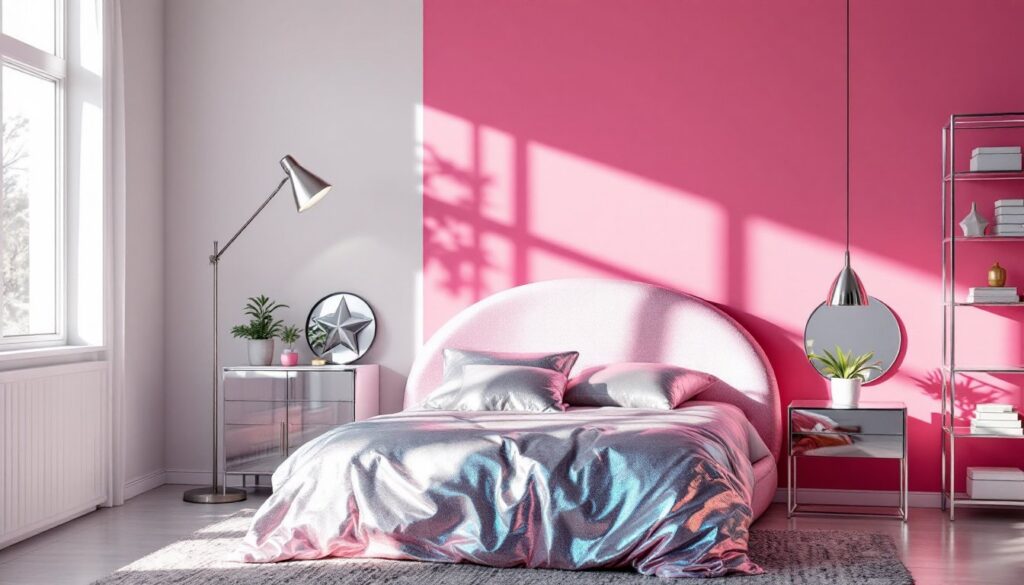
Bedrooms adapt Y2K easily. Paint an accent wall glossy hot pink or electric blue, add a curved headboard in chrome or acrylic, and layer iridescent bedding. Floor lamps with sleek metal bases replace traditional nightstands if space is tight. Keep the rest of the room pale to avoid visual overload during sleep.
Bathrooms benefit from metallic tile accents, subway tiles in brushed aluminum or holographic mosaics work without a full renovation. Chrome fixtures are standard anyway: upgrade to arc-shaped faucets for a softer Y2K curve. Iridescent or color-blocked shower curtains add personality. Acrylic soap dispensers and toothbrush holders maintain the aesthetic affordably.
Home offices shine here. A curved desk, clear acrylic or chrome desk accessories, neon task lighting, and a single bright accent wall turn a workspace into something inspiring. Iridescent desk organizers or holographic file folders make practical items look intentional. Chair choices matter, a transparent or chrome-legged seat feels contemporary while supporting focus.
Living rooms work best with a color-blocked approach: one jewel-tone wall, a neutral sectional, and a statement light fixture. Add chrome shelving for books and a few acrylic side tables. Keep artwork geometric or minimal (circles, stars, bold typography) to reinforce the era without dating it.
Common Mistakes to Avoid
Don’t go all-in everywhere. A Y2K living room looks intentional: a Y2K living room plus Y2K bedroom plus Y2K kitchen reads as theme-park. Reserve bold Y2K elements for spaces where you’ll enjoy them most.
Avoid cheap-looking metallics. Spray paint and flaking chrome look worse than wood or plain white after a few months. Invest in quality finishes or accept that metallics should be occasional accents, not structural elements.
Don’t forget lighting transitions. If an accent wall is neon pink, it needs softer overhead lighting to not feel aggressive at night. Pair bold colors with dimmable or warm white bulbs to maintain livability.
Skip actual Y2K fashion or decor from storage. A genuine 2002 poster or bedspread often feels dingy: curated new pieces that evoke the era feel fresher. Authenticity and timelessness aren’t the same thing.
Don’t neglect dark corners. Y2K thrives on light and shine. Poorly lit rooms with bold colors feel cramped and dated. Ensure adequate natural light or add mirror panels and bright fixtures to keep energy high.
Conclusion
Y2K interior design offers homeowners a distinct alternative to neutral minimalism or maximalist chaos. By thoughtfully blending chrome, neon accents, curved furniture, and bold color blocking with plenty of breathing room, it’s possible to create spaces that feel both retro-inspired and genuinely contemporary. Start small, refresh a bedroom or office with one accent wall and a few statement pieces, before committing to larger changes. Balance remains essential: let Y2K inform your aesthetic without consuming your entire home. When done right, the result feels optimistic, playful, and undeniably you.