Retail stores live or die by customer experience. While e-commerce dominates headlines, brick-and-mortar retailers who master their physical space are seeing strong foot traffic and higher conversion rates. Store interior design isn’t just about aesthetics, it’s about psychology, flow, and profit. A well-designed store guides customers naturally through departments, encourages lingering, and makes purchasing feel effortless. Whether you’re opening a new shop, refreshing an existing one, or looking to understand what works, understanding core design principles will directly impact your bottom line and brand loyalty.
Key Takeaways
- Store interior design directly influences customer behavior, foot traffic, and conversion rates—making strategic layout, lighting, and merchandising essential for retail success.
- Grid, loop, and free-flow layouts each serve different retail formats; place high-margin items at natural pause points, checkout areas, and store endpoints to maximize dwell time and transaction value.
- Quality LED lighting with 90+ CRI color rendering, combined with layered ambient and accent lighting, increases perceived product value and boosts impulse purchases while cutting energy costs by 75%.
- Visual merchandising techniques like the Rule of Thirds, color blocking, and storytelling through displays create compelling shopping experiences that encourage customers to linger and spend more.
- Accessibility features, sensory elements (scent and music), interactive try-before-you-buy stations, and visible staff support create memorable customer experiences that drive loyalty and repeat visits.
- Cost-effective upgrades—such as fresh paint, LED fixtures, reclaimed materials, and regular display rotation—deliver outsized ROI and signal professionalism without requiring major capital investment.
The Impact of Store Layout on Customer Behavior
Store layout is the skeleton of every retail space. Customers move through your store based on how you’ve arranged fixtures, aisles, and zones, often without realizing it.
The grid layout works well for quick-trip, high-volume stores like grocery chains. It’s predictable, efficient, and maximizes shelf space. Customers know what to expect, and restocking is straightforward.
The loop layout guides customers around the store’s perimeter in a natural flow, with high-margin or impulse items strategically positioned at eye level and endpoints. This design encourages exploration and increases dwell time, both good for average transaction value.
The free-flow layout suits boutiques and specialized retailers. It removes rigid structure, allowing customers to wander and discover. Merchandise clusters create natural gathering points, fostering a curated, sophisticated feel.
Key principle: place your highest-margin items and best-sellers where customers naturally pause, checkout areas, the back of the store (forcing a full journey), and intersections. Deep product knowledge drives longer visits. Clear sightlines help customers navigate without frustration. Test your layout by walking it yourself, timing how long it takes to reach the back, and noting where customers tend to cluster or skip.
Color Psychology and Lighting: Creating the Right Atmosphere
Color and light set the emotional tone before a customer touches anything.
Warm lighting (2700K–3000K color temperature) creates intimacy and comfort, ideal for apparel, furniture, and home goods where customers want to feel welcomed. Cool lighting (4000K–5000K) increases alertness and perceived product clarity, suiting electronics, jewelry, and pharmacies.
Wall colors influence mood and perception of space. Soft neutrals (beige, soft gray, white) expand visual space and let merchandise stand out. Bold accent colors draw eyes to focal points, a feature wall, display nook, or seasonal display. Avoid overwhelming the entire store: reserve bold hues for strategic zones.
LED vs. incandescent: LEDs cut energy costs by 75% and last 25,000+ hours, but cheap LEDs can cast unflattering light. Invest in quality 90+ CRI (Color Rendering Index) LEDs so products look true to life. Poor lighting makes colors appear washed out and drives customers away.
Layered lighting matters: combine ambient (overall brightness), task (focused on merchandise), and accent (highlighting displays). A tired, dimly lit store feels neglected: bright, well-lit stores feel clean, professional, and trustworthy. Retailers who upgrade to modern LED systems often report increased perceived value of inventory and higher impulse purchases.
Furniture and Fixtures That Drive Sales
Shelving, display tables, and racks aren’t just storage, they’re salespeople.
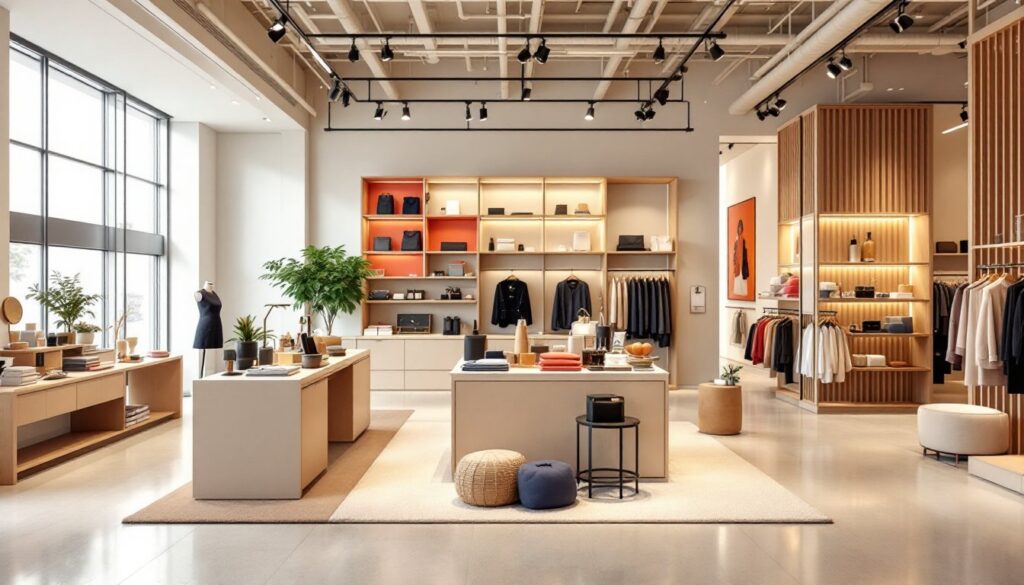
Wall-mounted shelving maximizes vertical space and creates clean lines. Adjustable shelves adapt to different product sizes and allow seasonal refreshes without major renovation.
Island displays and tables break up the floor and create natural pause points. They’re ideal for cross-selling: place complementary items together (socks near shoes, phone cases near phones). Tables also serve as gift-wrapping or transaction counters, reducing cashier congestion.
Pegboard and slatwall fixtures offer flexibility for hanging products and signage. They work especially well for hardware, accessories, and apparel. The modular nature means you can adjust without tools or downtime.
Checkout design deserves special attention. Open, visible checkout areas build trust: customers want to see tellers and feel monitored. Impulse-buy zones near registers, candy, magazines, small accessories, are proven revenue boosters. Queue management is critical: ensure customers can see the line and that the wait feels reasonable.
Material choice matters: heavy-duty fixtures handle frequent restocking. Reclaimed wood or metal finishes fit brand identity without excess cost. Avoid cheap plastic or wobbling displays: they damage brand perception and frustrate staff.
Visual Merchandising and Product Display Techniques
Visual merchandising transforms ordinary shelves into compelling narratives.
The Rule of Thirds applies here: divide displays into three zones, high (eye-catching), middle (best sellers), and low (value items and impulse buys). Don’t treat all products equally: elevate flagship items using height, lighting, or contrast.
Color blocking, grouping similar colors together, creates visual harmony and makes finding related products easier. Conversely, contrast draws the eye: a bright item against neutral background stands out. Use both strategically depending on whether you want to highlight or unify.
Storytelling through display works powerfully. Arrange a bedroom set with a headboard, nightstand, and lamp together. Show how apparel pieces coordinate. Create seasonal vignettes that inspire customers to envision products in their own lives.
Rotation and refresh matter more than most realize. Changing displays every 2–4 weeks signals freshness and gives repeat customers a reason to look twice. Stale displays, dusty, depleted, or unchanged for months, scream neglect.
Signage placement should guide without cluttering. Clear pricing, benefit statements (not just specs), and how-to cards encourage purchases. Handwritten, personal touches feel authentic: generic printed cards feel corporate.
Creating Memorable Customer Experiences Through Design
Engagement happens when customers feel understood and valued.
Seating and comfort zones matter. Apparel stores benefit from fitting room areas with good mirrors and nearby seating for companions. Furniture showrooms should let customers sit and test. Pharmacies or salons need waiting areas that feel pleasant, not punitive. Comfort invites lingering and repeat visits.
Sensory elements beyond visual create impact. The scent of fresh coffee in a bookstore or soft background music in a clothing boutique enhances mood and extends time spent. Sound levels matter too, too loud feels chaotic: too silent feels empty. Curated playlists aligned with brand identity work best.
Personalization and staff visibility humanize the space. Staff positioned throughout the floor (not just at checkout) appears helpful, not pushy. Stores that enable staff to assist with recommendations, wrap gifts, or answer questions outperform those with minimal staffing.
Interactive elements, product samples, demonstration zones, or try-before-you-buy stations, reduce purchase anxiety. A hardware store with a small project station shows how tools work. A beauty retailer with testers builds confidence in color choices.
Accessibility design expands your customer base and shows inclusivity. Wide aisles, clear pathways, accessible restrooms, and checkout heights that accommodate wheelchairs are non-negotiable. Good design for accessibility benefits everyone, parents with strollers, elderly customers, and people carrying large purchases all appreciate these features.
Sustainable and Cost-Effective Design Solutions
Budget and sustainability don’t have to be at odds.
Reclaimed and repurposed materials reduce costs and add character. Pallet wood shelving, salvaged doors, and recycled metal fixtures are trendy and eco-conscious. Thrift stores and architectural salvage yards are goldmines for unique, affordable pieces.
Paint and lighting upgrades deliver outsized impact for modest investment. A fresh coat of paint in the right color, combined with new LED fixtures, transforms a tired store for under $5,000 in many cases. Test samples before committing to wall color.
Modular fixtures beat custom builds. Pre-manufactured shelving and display units reduce installation time and cost. They’re also easy to adapt or relocate as your business grows or seasons shift.
Energy efficiency lowers operating costs. LEDs cut utility bills significantly over time. Motion-sensor lighting in stockrooms and restrooms prevents waste. Smart thermostats reduce HVAC spend without sacrificing customer comfort.
DIY maintenance keeps stores looking fresh between professional refreshes. Staff can repaint fixtures, rearrange displays, and deep-clean without hiring contractors. Simple, documented processes ensure consistency. A store that feels maintained, clean fixtures, well-stocked shelves, minor repairs addressed promptly, signals care and professionalism.
Seasonal and promotional displays don’t require permanent infrastructure. Temporary wall treatments, portable signage, and flexible layouts let you evolve without capital-heavy renovations.
Conclusion
Store interior design merges art, psychology, and commerce. Every layout choice, lighting adjustment, and display arrangement influences customer behavior and purchase decisions. Retailers who invest in thoughtful design, balancing aesthetics with function, brand identity with customer comfort, see measurable returns in traffic, transaction value, and loyalty. Start with a layout audit, evaluate your lighting, and refresh displays seasonally. Small, strategic changes compound. Your store’s physical environment is a powerful marketing and sales tool. Use it intentionally.