Modern retro interior design has become one of the most approachable ways for homeowners to add character and warmth to their spaces without committing to a full vintage restoration. Unlike pure retro or vintage design, which attempts historical accuracy, modern retro borrows the soul of past decades while keeping functionality, comfort, and current aesthetics at the center. The trend isn’t about filling a room with 1970s shag carpet and calling it done: it’s a deliberate blend that respects mid-century forms, nostalgic color palettes, and authentic materials while maintaining clean lines and thoughtful contemporary touches. Whether a homeowner is working on a bedroom, kitchen, or living space, understanding how to balance these elements prevents the design from feeling either dated or soulless.
Key Takeaways
- Modern retro interior design blends the soul of past decades with contemporary functionality by combining mid-century forms, nostalgic color palettes, and authentic materials while maintaining clean lines and current aesthetics.
- A successful modern retro color palette uses the 60-30-10 rule: 60% neutral base (warm whites, greiges), 30% secondary accent (sage green, olive), and 10% bold pop color (burnt orange, mustard yellow) to avoid overwhelming the space.
- Statement furniture pieces such as credenzas, Eames chairs, or vintage dressers serve as design anchors, while quality reproductions and contemporary pieces that echo retro forms fill remaining space without competing for attention.
- Iconic lighting fixtures—sputnik chandeliers, arc floor lamps, and sculptural pendant lights—shape the entire mood of modern retro spaces and should be chosen with warm color temperature (2700K) bulbs for period authenticity.
- Apply a 70/30 design ratio with 70% contemporary baseline and 30% retro accents to prevent rooms from feeling museum-like, and edit furniture and accessories seasonally to keep the space fresh while maintaining core retro character.
- Successful modern retro spaces prioritize intentionality and restraint by displaying curated objects in groups of 2-3 per surface, avoiding pattern overload, and sourcing authentic pieces from local dealers and online marketplaces while filling gaps with honest reproductions.
What Defines Modern Retro Interior Design
Key Characteristics and Visual Elements
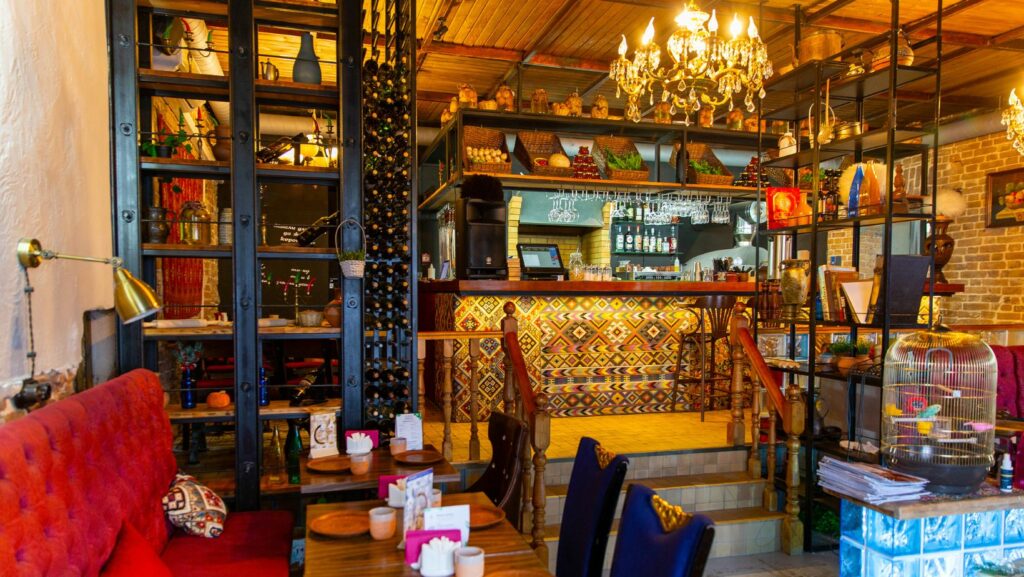
Modern retro design sits squarely between authenticity and practicality. The style embraces the clean geometry and iconic forms of mid-century, 1970s, and early 1980s design, think Eames chairs, tapered wood legs, and brass hardware, but filters these through today’s sensibilities. Colors tend toward warm, earthy tones paired with jewel accents rather than the neon saturation of original retro. Materials are honest: real wood veneers, ceramic tiles, canvas upholstery, and solid metal fixtures replace plastic imitations.
What makes modern retro distinct is intentionality. A space shouldn’t feel like a time capsule or a museum: instead, it should feel lived-in and current. Homeowners might display a vintage credenza alongside minimalist shelving, or pair a retro pendant light with a sleek kitchen island. The key is restraint. One or two statement pieces anchor the room: everything else supports that vision without competing for attention. Texture matters enormously, rough plaster walls, warm wood tones, and worn finishes add depth and prevent sterility.
The Color Palette: Nostalgic Hues With Modern Twists
The colors that define modern retro pull from mid-century and 1970s archives but are applied with contemporary restraint. Warm neutrals, soft creams, greiges, warm grays, and natural wood tones, form the base. Accent colors include muted mustard yellow, olive green, burnt orange, terracotta, and dusty rose. Unlike saturated retro palettes, these hues feel sophisticated and timeless rather than costume-like.
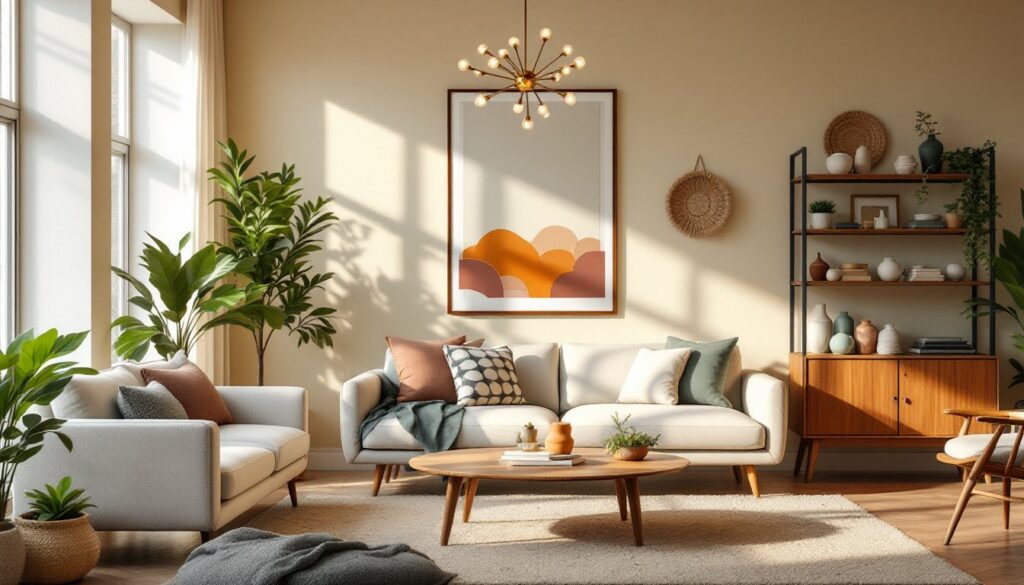
When deploying color, successful modern retro spaces typically use the 60-30-10 rule: 60% neutral base, 30% secondary accent, and 10% bold pop color. A living room might have warm white walls (60%), sage green upholstery (30%), and brass fixtures plus burnt orange throw pillows (10%). The effect feels intentional, not random. Paint selection matters, satin or eggshell finishes evoke period authenticity better than flat or high-gloss. When choosing retro paint colors, homeowners should order samples and observe them in their actual lighting: what looks peachy in the store can read orange at home. Lighting affects perceived color temperature throughout the day, so testing is non-negotiable.
Furniture and Decor: Sourcing Authentic and Reproduction Pieces
Finding the right furniture balance, authentic vintage mixed with quality reproductions, is central to modern retro design. Authentic mid-century pieces, whether real or well-made reproductions, serve as anchors. A genuine credenza, a solid wood desk with tapered legs, or an original Charles and Ray Eames lounge chair commands attention and sets the design tone. These statement pieces justify their cost through durability and timeless appeal.
Authentic pieces are sourced from local vintage dealers, online marketplaces like Facebook Marketplace and Craigslist, estate sales, and specialty shops. Red flags include wobbly joints, water damage, or upholstery that’s shot: these repairs often exceed a piece’s value. Quality matters, real hardwood veneers and solid frames outlast particle board imitations. For budget-conscious decorators, high-quality reproductions from contemporary makers fill gaps. Brands producing honest reproductions (recognizable from descriptions and photos) cost less than originals while maintaining design integrity.
Fill remaining space with contemporary pieces that echo retro forms without mimicking them directly. A modern sofa in neutral linen pairs perfectly with a vintage credenza. Accessorize with vintage-inspired textiles, woven wall hangings, patterned rugs with geometric or botanical motifs, and throw blankets in natural fibers. Avoid mixing too many patterns: stick to two or three complementary prints per room. Plants in ceramic pots are non-negotiable, they soften lines and ground the vintage aesthetic in life and movement.
Lighting and Accessories: The Detail That Completes the Look
Lighting shapes the entire mood of a modern retro space. Iconic fixtures from the mid-century and 1970s, sputnik chandeliers, arc floor lamps, pendant lights with sculptural shades, and table lamps with ceramic or brass bases, serve as focal points. A single statement light fixture, whether authentic or a quality reproduction, can anchor an entire room. Avoid mixing too many different fixture styles: cohesion matters more than abundance.
Warm color temperature (2700K) in bulbs mimics period-appropriate incandescent lighting and flatters both space and skin tone. Dimmers add flexibility, letting the homeowner shift mood from energetic daytime to cozy evening. Layered lighting, ambient overhead, task lighting at work areas, and accent lighting on shelves or artwork, creates depth and prevents that clinical, single-bulb flatness.
Accessories are where personality shines. Curate artwork thoughtfully: vintage travel posters, original illustrations, or modern abstract pieces in warm tones all work. Keep styling spare, three objects on a shelf read better than twelve. Include functional accessories with vintage appeal: wooden bowls, brass or ceramic vases, vintage clocks, and small sculptural objects. Edit ruthlessly. Modern retro spaces breathe: they don’t overwhelm with stuff. Incorporate one or two larger-scale accessories (a large ceramic planter, a wooden mirror frame, a woven wall hanging) rather than filling every surface with tiny objects.
Integrating Modern Retro Into Different Room Spaces
Living rooms anchor modern retro homes. Start with a quality sofa (contemporary or vintage) in neutral upholstery, layer in a statement armchair with retro appeal, and add a wood coffee table with clean lines or tapered legs. Shelving, open or closed, displays a mix of books, art, and curated objects. A focal point light fixture and 1-2 accent colors tie everything together.
Kitchens benefit from retro hardware, open shelving to display vintage dishware, and period-appropriate appliances if budget allows. Subway tile backsplashes, warm wood cabinetry, or two-tone painted cabinetry (white uppers, mustard or green lowers) are classic moves. Bar seating and a bold pendant light over the island complete the look without requiring major renovation.
Bedrooms feel intimate with muted tones, a quality bed frame with simple lines or mid-century appeal, and soft textiles. A vintage dresser, a sculptural nightstand lamp, and artwork in warm tones create a retreat. Avoid pattern overload: let the wood tones and neutral walls breathe.
Bathrooms incorporate retro tiles (geometric or botanical patterns), brass or bronze fixtures, and a vintage mirror frame. Storage baskets and simple shelving prevent clutter. A single statement light fixture above the vanity matters disproportionately here.
Practical Tips for Balancing Vintage and Contemporary Elements
The biggest mistake homeowners make is over-committing to retro. A room should feel current, not museum-like. Aim for a 70/30 split: 70% contemporary baseline (clean walls, modern sofa, current appliances) and 30% retro accents (statement furniture, color, lighting, accessories). This ratio prevents the space from feeling trapped in the past.
Start with one anchor piece, a credenza, a light fixture, or a bold paint color, and build outward. Bring home samples of paint, fabric, and finishes before committing: colors and patterns read differently in natural light than in a store. Group similar items together rather than scattering them: three ceramic vases on a shelf read as intentional styling, while the same pieces spread across the room feel disorganized.
Edit seasonally. Rotate throw pillows, swap artwork, and refresh accessories with the seasons. This keeps the space fresh while maintaining the core retro aesthetic. Finally, don’t force authenticity. A quality reproduction that fits your budget and looks good serves your home better than holding out for an original piece that never arrives. Modern retro is about feeling and function, not provenance.