
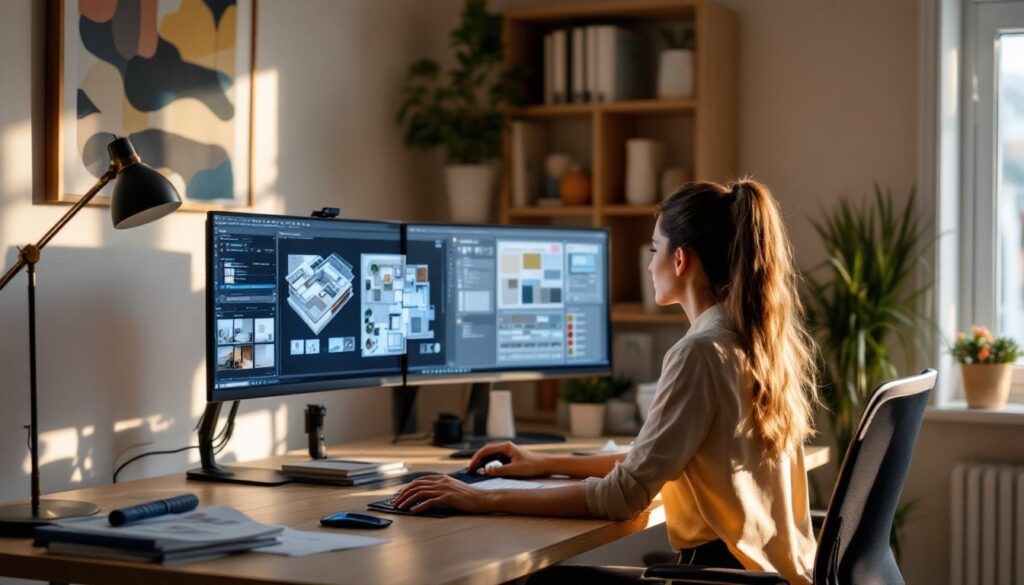
Interior design is evolving, and so are the pathways to entering the profession. A master’s in interior design online offers flexibility, affordability, and accessibility for working professionals and career-changers who can’t relocate or attend classes on campus. In 2026, online master’s programs in interior design have matured significantly, they’re no longer afterthoughts tacked onto traditional curricula. Many deliver rigorous, design-focused education through virtual studios, live critiques, and collaborative projects. Whether someone wants to deepen their expertise, transition into design from another field, or earn credentials that distinguish them in a competitive market, an online master’s can be the right move. This guide walks through what these programs offer, how to evaluate them, and what comes next.
Key Takeaways
- A master’s in interior design online offers flexibility, affordability, and accessibility for working professionals, with programs completing in 18–24 months without relocating.
- Top-tier online programs include rigorous curriculum covering design theory, building codes, ADA compliance, sustainable practices, and virtual studio critiques that mirror professional practice.
- NASAD accreditation and regional accreditation are essential for career credibility, professional credentials (NCIDQ, ASID, IIDA), and transferable credits.
- Graduates with a master’s degree typically earn 10–20% more than bachelor’s-only designers, with senior positions in major markets ranging from $80,000–$120,000+.
- Successful program selection requires evaluating curriculum depth, faculty credentials, technical infrastructure, and peer interaction through alumni reviews and direct school outreach.
- Application planning should begin 6–9 months before your intended start date, with strong portfolios mattering more than test scores in most online master’s programs.
Why Choose an Online Master’s in Interior Design?
An online master’s in interior design removes geographic barriers and inflexible scheduling that traditional programs impose. Prospective students can pursue a degree while maintaining full-time employment, managing family responsibilities, or running a design side business. Online formats compress study time, many programs run 18 to 24 months instead of the standard two years, without sacrificing content depth.
Cost is another factor. Online programs typically have lower overhead than campus-based schools, which translates to reduced tuition. There’s no relocation expense, no commute, and no campus housing premium. For students in rural areas or regions with few design schools, an online degree opens doors that wouldn’t otherwise exist. Finally, online cohorts are increasingly diverse. Peers may work across different time zones, industries, and design sectors, enriching group projects and professional networks. Unlike a traditional on-campus experience, an online program attracts mature, motivated learners who bring real-world perspective to discussions.
What You’ll Learn in an Online Interior Design Master’s Program
A rigorous online master’s covers both conceptual foundations and applied technical skills. Core courses typically include advanced design theory, spatial planning, lighting design, materials science, and color theory, subjects that establish why certain choices work, not just how to make them look good.
Students jump into building codes, accessibility standards (ADA compliance, for example), and sustainable design practices. These aren’t electives: they’re bedrock skills that separate professionals from hobbyists. Electives might focus on hospitality design, residential renovation, commercial architecture, or specialized areas like healthcare interiors or adaptive reuse. Many programs include a capstone project, a full-scale design proposal or research thesis, that demonstrates mastery.
Virtual studio time is critical. Unlike some online programs, top-tier master’s degrees include live or asynchronous design critiques where faculty and peers evaluate work. This feedback loop mirrors professional practice. Students learn to defend design decisions, iterate under critique, and communicate their ideas clearly. Project-based courses build portfolios simultaneously, so graduates finish with a professional-ready collection ready to show potential employers or clients.
How to Choose the Right Online Program for You
Start with accreditation. Look for programs accredited by the National Association of Schools of Art and Design (NASAD) or regionally accredited institutions. Accreditation matters when applying for professional credentials like IIDA or ASID membership, and it signals rigorous standards.
Next, examine the curriculum depth and structure. Does the program emphasize residential, commercial, or both? Are there hands-on elements, site visits, material samples, or maker-space access, or is everything screen-based? Some online programs partner with brick-and-mortar locations to offer optional in-person intensives. Check faculty credentials too. Instructors should have professional practice experience, not just academic backgrounds.
Review the technical infrastructure. Does the school provide software licenses (AutoCAD, SketchUp, Adobe Creative Suite) or require students to purchase? Are virtual critiques recorded so asynchronous learners can participate? Read recent student reviews on independent sites and reach out to alumni on LinkedIn. Ask specific questions: How much peer interaction happens? Is there a mandatory summer residency? What’s the actual time commitment per week? These details separate programs that work from programs that frustrate.
Career Opportunities and Earning Potential
A master’s in interior design opens doors that a bachelor’s alone might not. Graduates move into senior designer roles, lead project teams, or transition into specialized areas like universal design consulting or sustainable interiors. Some become freelance design principals, landing larger residential or commercial projects. Others shift into related fields, design management, facilities planning, retail design, or furniture product development, where the degree strengthens candidacy.
Earning potential varies by location, specialization, and experience. According to the U.S. Bureau of Labor Statistics, interior designers earn a median annual salary around $60,000, but senior designers in major markets (New York, Los Angeles, Chicago) often earn $80,000 to $120,000 or more. Freelancers’ income hinges on project volume and rates. A master’s degree typically translates to a salary bump of 10–20% compared to a bachelor’s degree, and it’s often required for management or consultant roles. The credential also positions graduates to mentor junior staff, teach part-time, or consult on high-value projects where clients expect advanced expertise.
Accreditation and Credential Recognition
Accreditation isn’t just a checkbox, it’s essential. NASAD-accredited programs meet rigorous standards in curriculum, faculty, and facilities. Regional accreditation (through bodies like the Middle States Commission on Higher Education) ensures credits transfer and the institution is legitimate. Always verify accreditation on the school’s official website or the accrediting body’s directory.
Graduates often pursue additional credentials after earning their master’s. The National Council for Interior Design Qualification (NCIDQ) exam qualifies designers to use the title “Interior Designer” in regulated states and to practice on regulated scopes like health/safety/welfare spaces. A master’s degree doesn’t automatically waive exam prerequisites, but it signals deep knowledge and may fast-track eligibility in some jurisdictions. Professional memberships, ASID, IIDA, or IDC, boost credibility and unlock job boards, continuing education, and networking. Employers and clients increasingly expect these credentials for senior roles, particularly in commercial or healthcare design.
Getting Started: Application Requirements and Next Steps
Most online master’s programs require a bachelor’s degree from an accredited institution, though not necessarily in design. GPA, GRE scores, a portfolio, statement of purpose, and references are standard. Some programs waive the GRE: check individual requirements. A strong portfolio matters more than test scores. Even if the program doesn’t require one, preparing a portfolio during the application process demonstrates serious intent.
Start researching 6–9 months before your intended start date. Request detailed program information directly from schools, the website alone won’t answer nuanced questions about cohort size, professor availability, or software licensing. Attend virtual information sessions where you can ask live questions. Compare tuition and financial aid packages. Federal student loans, employer tuition assistance, and scholarships through professional associations exist. Some schools offer payment plans to spread costs over the program length. Once you’ve selected a program, submit your application early. Rolling admissions fill seats, and strong applicants can gain access to priority funding. After acceptance, clarify which software you need, confirm internet speed requirements, and set up a dedicated workspace at home, you’ll spend 15–25 hours per week in that space.
Conclusion
An online master’s in interior design is a legitimate, accessible pathway to advancing a career or entering the field with advanced credentials. The right program combines rigorous curriculum, experienced faculty, accreditation, and peer interaction. Take time choosing, a good fit means you’ll complete the degree, build a portfolio, and exit ready to practice at a higher level. In 2026, an online master’s is no longer a shortcut: it’s a professional standard that employers and clients recognize and respect.