Edwardian interior design represents a bridge between the ornate Victorian era and the cleaner lines of Modernism, flourishing from 1901 to 1910 during the reign of King Edward VII. Unlike the heavy, cluttered aesthetics of the Victorian period, Edwardian style strips away excess while maintaining elegance through refined details, proportional furniture, and sophisticated color schemes. Homeowners and designers today are rediscovering this era’s approach, it offers richness without overwhelming a space, making it surprisingly adaptable for contemporary homes. Whether restoring a period property or incorporating Edwardian touches into a modern interior, understanding the core principles helps achieve authentic, livable results.
Key Takeaways
- Edwardian interior design bridges Victorian maximalism and modern minimalism by emphasizing refined proportions, quality materials, and restrained elegance without overwhelming spaces.
- Soft, sophisticated color palettes—pale creams, warm whites, soft grays, and muted tones—define Edwardian style and create restful, livable interiors that work in contemporary homes.
- Edwardian furniture prioritizes clean lines and gentle curves over heavy ornament, with pieces like Chesterfield sofas and tapered legs that remain timeless and accessible today.
- Strategic architectural details such as wainscoting, dado rails, and quality baseboards add authentic character to modern spaces without requiring period-correct reproduction.
- Layered lighting with fabric shades and careful accessory placement—a few quality pieces with breathing room—define the Edwardian approach of elegance through restraint rather than abundance.
What Defines Edwardian Interior Design
Edwardian interior design emerged as a reaction to Victorian maximalism. While Victorians celebrated abundance, dark woods, heavy drapes, ornate carvings, and cluttered surfaces, Edwardians embraced a lighter, more restrained elegance. The style reflects Edwardian society’s confidence and relative stability, translated into interiors through refined proportions, quality materials, and carefully considered ornamentation. Rather than filling every surface, Edwardian rooms left breathing room: walls were elegant without being busy, and each piece of furniture earned its place.
The style also benefited from technological advances. Gas lighting gave way to electricity, allowing for better-lit interiors that showcased craftsmanship rather than hiding it in shadow. Improved manufacturing meant fine furnishings became more accessible to the middle class, not just the wealthy. Paint finishes, wallpapers, and textiles were mass-produced with quality and taste in mind. This democratization of design is partly why Edwardian interiors feel livable and achievable today, they were designed for people with real lives, not museums.
Key Characteristics of the Edwardian Style
Color Palettes and Materials
Edwardian color schemes favor soft, sophisticated tones that feel restful rather than dramatic. Pale creams, warm whites, soft grays, and muted greens dominated walls. Trim and baseboards were typically painted in contrasting whites or pale ivory, creating visual distinction without harsh contrast. Wallpapers featured damasks, florals, and geometric patterns, but in delicate scales and coordinated colorways, not the dense, dark florals of the Victorian era.
Materials reflect quality and understated luxury. Wood plays a central role: oak, mahogany, and walnut were common for floors, paneling, and furniture. Wall treatments often included wainscoting or dado rails (a molding running horizontally at about waist height) painted in cream or soft color, with patterned wallpaper or paint above. This classic combination adds architectural interest without bulk. Plaster ceilings were plain or featured simple geometric relief motifs rather than elaborate medallions.
Textiles were equally important. Heavy damask, silk, linen, and high-quality cotton fabrics were favored for upholstery and drapery. Unlike Victorian velvet thickness, Edwardian textiles leaned toward refined weaves that catch light beautifully. Even budget-friendly cotton chintz with small-scale prints fit the aesthetic when colors stayed muted.
Furniture and Decorative Elements
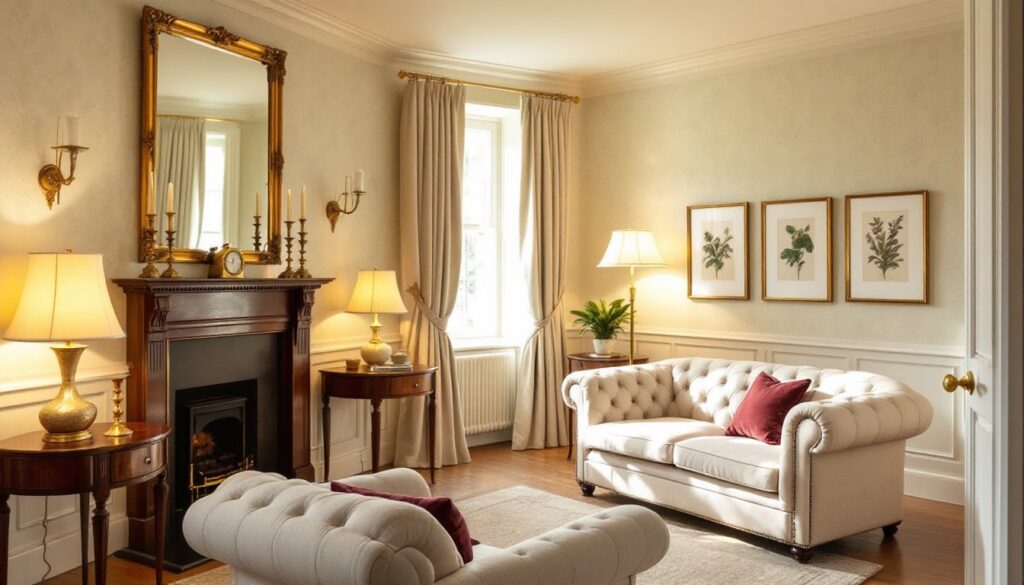
Edwardian furniture prioritized clean lines and proportion over ornament. Dining tables, sideboards, and bedroom pieces featured gentle curves and inlaid details rather than carved relief work. Legs were typically turned, tapered, or had Queen Anne curves (a softer, more proportional take on Victorian cabriole legs). The Chesterfield sofa, with its rolled arms, deep button tufting, and structured shape, became an Edwardian staple and remains relevant today.
Upholstered pieces were common, often with contrast braid trim or nailhead edging (small decorative nails driven in patterns along edges). Rather than filling a room, Edwardian interiors featured occasional tables, small bookcases, and carefully placed mirrors to open up space and reflect light. Mirrors with thin, refined frames, often gilded or painted white, were functional and decorative.
Accessories emphasized quality over quantity. A few good prints in coordinated frames, a quality rug, decorative ceramics, and books arranged thoughtfully created visual interest. Lamps with fabric shades (not bare bulbs) lit rooms warmly. Fireplaces remained focal points, with simple mantels displaying a clock, candlesticks, and perhaps a mirror above. The overall effect was never busy, every object had breathing room.
Creating an Edwardian-Inspired Space Today
Bringing Edwardian style into a modern home doesn’t require period-correct reproduction. The following approach works for honest, livable results:
Start with Paint and Wall Treatment. Choose a soft, warm neutral for walls, pale cream, warm white, or soft gray. If budget allows, add wainscoting or a dado rail (available as polyurethane molding, much easier to install than plaster). Paint the lower section cream or soft sage, the upper section your chosen wall color, and trim in bright white. This creates instant architectural character and ties the room together visually. If wainscoting feels like too much, simple baseboard trim (at least 6 inches tall) and crown molding update any room with authentic proportion.
Select Furniture Thoughtfully. Avoid heavily carved or overstuffed pieces. Look for upholstered seating with rolled arms, tapered legs, and restraint in detail. A quality sofa in neutral linen or cotton velvet, paired with one or two accent chairs in coordinating fabric, reads authentically. Mix vintage finds (Edwardian furniture is still relatively affordable compared to earlier periods) with new pieces in compatible styles. Antique dealers and online marketplaces often stock bent-wood chairs, small writing desks, and occasional tables that fit perfectly.
Pay Attention to Hardware and Details. Doorknobs, hinges, and light switch plates set a tone. Brass or bronze hardware with simple, refined designs signals Edwardian thinking. Even updating switch plates from plastic to brushed brass ($3–8 per plate) shifts a space’s feel. Fireplace surrounds, if original, can be highlighted with new mantel accessories, a simple mirror, a pair of candlesticks, a few leather-bound books.
Textiles and Lighting. Swap out curtains for linen or cotton in cream, soft taupe, or muted patterns. Avoid floor-to-ceiling velvet darkness: Edwardian rooms preferred elegant simplicity. Hang curtains from simple brass rods. For lighting, choose fixtures with fabric shades or frosted glass, Edison bulbs provide warm light if going vintage is preferred. Table lamps with cream or ivory shades on side tables create that characteristic soft, layered lighting.
Accessories and Final Touches. Hang artwork in groups of 2–5 pieces with simple wood or gilt frames. Keep it uncluttered: a print above a console, a mirror above a fireplace, a few framed photographs on a shelf. Add color through small items, a teal ceramic vase, a burgundy velvet cushion, a botanical print, rather than painting walls jewel tones. This approach lets the architecture and thoughtful proportions shine.
Conclusion
Edwardian interior design appeals to homeowners seeking elegance without excess. Its emphasis on proportion, quality materials, restrained color, and functional beauty translates well to modern living. Whether through architectural detailing like wainscoting, carefully chosen furniture, or refined accessories, incorporating Edwardian principles creates interiors that feel timeless and genuinely comfortable. The style rewards thought and quality over trend-chasing, a refreshing approach in contemporary design.