Bohemian interior design isn’t about following rigid rules, it’s about curating a home that reflects individuality, comfort, and creative expression. The bohemian style, rooted in the free-spirited aesthetics of the 1960s and 70s, has evolved into a sophisticated approach to decorating that celebrates color, texture, and global influences. Whether someone is drawn to eclectic art, handcrafted furniture, or layered textiles, bohemian design offers a framework that feels both intentional and organic. This guide walks through the core principles, practical tips, and actionable steps to create a bohemian space that’s uniquely yours.
Key Takeaways
- Bohemian interior design style prioritizes authenticity and self-expression over rigid rules, blending handcrafted items, vintage finds, and global influences into uniquely personal spaces.
- Layer warm earth tones like terracotta and burnt sienna with jewel tones and natural textures such as jute, macramé, and leather to create visual depth and tactile interest in bohemian interiors.
- Mix patterns freely using varying scales—large geometric prints with smaller florals and abstract textures—and layer textiles across pillows, throws, and rugs for an intentional yet organic look.
- Arrange furniture for conversation and comfort rather than symmetry, combining pieces of different wood tones, styles, and eras to build an authentic bohemian aesthetic.
- Curate meaningful accessories, live plants, and gallery-style art that reflect your personal story and travels, avoiding mass-produced items in favor of thrifted and handmade treasures.
- Build your bohemian space slowly around one anchor piece, prioritizing quality over quantity and embracing imperfection as a sign of authentic living and character.
What Is Bohemian Interior Design?
Bohemian interior design is a decorating philosophy rooted in authenticity and self-expression rather than trend-chasing. It draws inspiration from Eastern European, Indian, African, and Latin American aesthetics, blending handcrafted elements, vintage finds, and personal collections into cohesive living spaces. The style rejects minimalism and mass production in favor of layers, patterns, and meaning.
Unlike formal design movements, bohemian style thrives on contradiction, bold colors coexist with muted tones, antique furniture sits beside modern pieces, and patterns mix freely. What ties it together isn’t adherence to a checklist but a curator’s eye for pieces that feel authentic and personal. The goal is creating a space where comfort and individuality matter more than looking “designed.”
Key characteristics include an emphasis on handmade and vintage items, global textile influences, natural materials, and bold color choices. There’s also an intentional anti-consumerist thread: bohemian spaces often celebrate thrifted finds, inherited pieces, and DIY projects rather than new purchases.
Core Color Palettes and Textures
Bohemian color schemes typically fall into warm earth tones punctuated by jewel tones or spice hues. Think terracotta, burnt sienna, mustard yellow, deep rust, and warm browns as foundational colors, layered with emerald green, sapphire blue, burgundy, or deep ochre for richness.
Neutrals play a supporting role: cream, ivory, warm gray, and natural wood tones provide breathing room and prevent the space from feeling chaotic. Many bohemian interiors use a neutral base (walls, larger furniture pieces) and introduce warm and deep colors through textiles, art, and accessories.
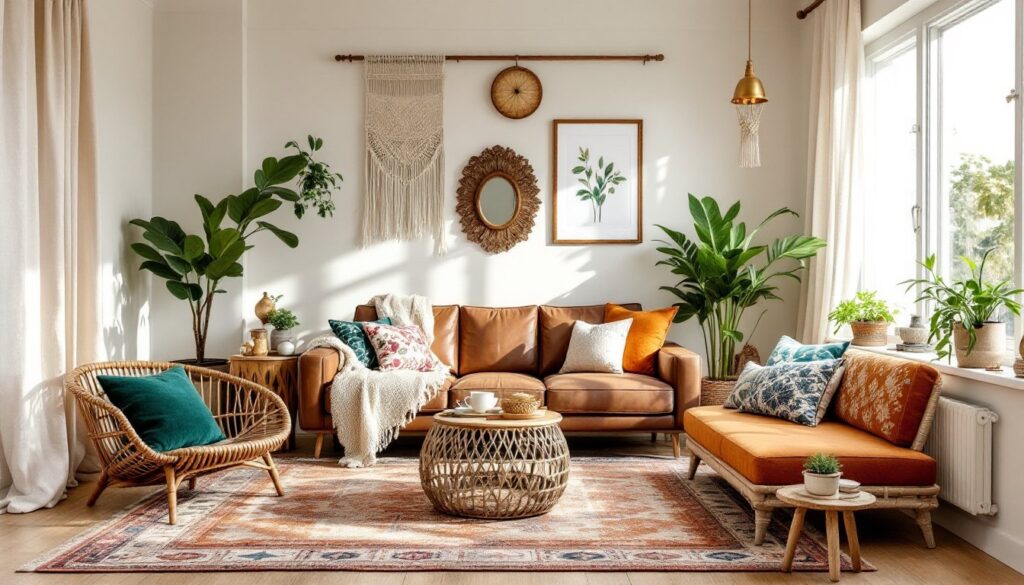
Texture is equally important as color in bohemian design. Natural materials like jute, macramé, leather, cotton, linen, and raw wood create depth and tactile interest. Adding rough-woven rugs, chunky knit throws, and rattan accents brings authenticity. Mixing glossy ceramics, matte woven baskets, and polished brass hardware creates visual variety without visual chaos. Texture combats the risk of bohemian space feeling flat or overly decorated.
Furniture and Layout Principles
Bohemian interiors embrace low-to-the-ground or vintage furniture arranged for conversation rather than symmetry. Sofas, accent chairs, and floor cushions cluster together to create intimate seating areas. Furniture placement prioritizes flow and function over formal balance, there’s nothing rigid or centered about it.
Priority goes to quality and character over matching suites. A leather sofa, vintage armchair, rattan pouf, and upholstered bench can share the same room without clashing. Mixing wood tones, light oak, dark walnut, honey-toned teak, adds bohemian authenticity. Look for pieces with turned legs, carved details, or worn finishes that suggest history and handcraft.
Low tables, ottomans with built-in storage, and wooden stools serve as flexible anchors. Plants and floor cushions fill corners and edges, softening hard lines. Bohemian layouts feel inhabited and lived-in, never sterile or overly arranged. Leave space for personal touches, collections grow, and the room evolves.
Textiles, Patterns, and Layering
Layering textiles is the heartbeat of bohemian design. Start with foundation pieces: a large area rug in a warm neutral or subtle pattern anchors the room. Layer patterned pillows and throws across seating, mix geometric, floral, ikat, and paisley patterns without hesitation. The key is varying scale: large-scale patterns on one pillow, smaller repeats on another, abstract textures on a third.
Curtains in lightweight cotton or linen diffuse light and add softness. Consider natural undyed fabric, hand-blocked prints, or dyed linen for authenticity. Wall tapestries, kilim rugs hung as art, and macramé wall hangings introduce pattern vertically.
Bedrooms benefit from layered bedding: quality cotton sheets, a colorful duvet or quilt, multiple throw pillows, and a knit or woven throw draped across the footboard. Mix white or cream sheets with patterned blankets and cushions. The result feels curated yet comfortable. Texture variation, smooth linen, chunky knit, soft cotton, rough-woven jute, creates visual interest and tactile warmth.
Accessories and Decorative Elements
Bohemian accessories tell stories. Curate collections of meaningful items: travel souvenirs, inherited jewelry boxes, thrifted ceramic vessels, handmade baskets, and vintage books. Shelving and tables become display surfaces for these treasures, arranged in clusters rather than sparse isolation.
Live plants are non-negotiable, hanging pothos, fiddle leaf figs, trailing philodendrons, and potted succulents create organic energy. Mix hanging planters in macramé, ceramic, and woven materials at varying heights. Plants soften edges and connect the interior to natural elements.
Art includes framed textiles, watercolor paintings, ink drawings, and photographs hung gallery-style without rigid alignment. Mirrors in ornate frames or simple wood bounce light and expand perceived space. Lighting matters: pendant lights with woven shades, table lamps with patterned bases, or string lights create warm ambiance over bright overhead fixtures.
Global accents, hand-woven poufs, carved wooden bowls, brass trays, indigo-dyed textiles, and ceramic plates, anchor the bohemian aesthetic while adding function and personality.
Creating Your Bohemian Space
Start with an honest assessment of your space and preferences. What colors naturally draw you? Which patterns feel joyful rather than chaotic? What memories or travel experiences do you want to celebrate? Bohemian design works best when it reflects genuine taste, not Pinterest boards.
Begin with one anchor piece, a colorful rug, a statement sofa, or a collection of art. Build around it slowly, testing combinations before committing to full purchases. Thrift stores, online marketplaces, and estate sales offer affordable vintage and handcrafted pieces that feel more authentic than mass-produced bohemian furniture.
Prioritize texture and layering over quantity. Five carefully chosen pillows with varied patterns beat twenty identical cushions. A single statement wall tapestry often feels bolder than covering every wall. Edit ruthlessly, bohemian doesn’t mean cluttered.
Invest in quality basics: durable area rugs, well-constructed furniture, and quality textiles. These anchor pieces last through trend cycles. Accessories and smaller items can shift as tastes evolve. Remember that bohemian interiors benefit from imperfection, slight color shifts, worn edges, and handmade quirks add authenticity that new, pristine furnishings can’t replicate. A space should improve over years of living in it.
Conclusion
Bohemian interior design celebrates individuality, comfort, and creative expression in ways few other styles do. It’s not about buying a specific collection or following rigid rules, it’s about curating a home that feels authentically yours, layered with colors, textures, patterns, and meaningful objects. By starting with foundational principles like warm color palettes, quality mixed furniture, and thoughtful textile layering, anyone can create a bohemian space that evolves with their life. The reward is a home that looks lived-in, feels welcoming, and tells the story of who you are.