Modern Moroccan interior design has become a go-to aesthetic for homeowners seeking warmth, personality, and global sophistication without the fussy formality of traditional décor. Unlike the ornate, heavily patterned maximalism of historical Moroccan interiors, the modern interpretation strips away excess while retaining the soul, rich colors, handcrafted textures, and intricate metalwork, balanced with clean lines and functional minimalism. It’s design that invites layering and storytelling, where every piece earns its place. Whether starting from scratch or refreshing a single room, understanding how to balance vibrant color, traditional craftsmanship, and contemporary simplicity is key to pulling off this look authentically.
Key Takeaways
- Modern Moroccan interior design balances vibrant jewel tones and handcrafted textures with clean lines and functional minimalism to create warmth without excess.
- Color strategy in modern Moroccan design relies on restraint—pairing one jewel-toned accent wall or statement piece with neutral furnishings to avoid visual chaos.
- Layering natural fiber textiles like Berber rugs, woven throws, and macramé wall hangings creates depth and authenticity while grounding the space tactilely.
- Quality metallic accents in warm-toned brass, copper, and oxidized finishes tied throughout lighting, mirrors, and decor pieces complete the cohesive aesthetic.
- Modern Moroccan design succeeds through intentional sourcing and thoughtful layering rather than quantity, building a collected, lived-in look that honors cultural craftsmanship.
What Defines Modern Moroccan Design
Modern Moroccan interior design blends Moroccan craftsmanship and cultural aesthetics with the clean geometry and restraint of contemporary design. The hallmark is intentionality, every textile, tile, and light fixture serves both beauty and function.
Traditional Moroccan design leans on carved zellige tilework, carved wood screens (known as jali), and intricate plasterwork. Modern reinterpretation incorporates these elements as accents rather than dominant features. You might see a single geometric tile as a kitchen backsplash, framed zellige art, or a carved wood side table instead of walls cloaked in traditional patterns.
The palette is the true anchor. Instead of maximalist color layering, modern Moroccan design uses restraint, a jewel-tone accent wall paired with neutral furnishings, or a bold patterned rug grounding a room of whites and creams. The goal is visual impact without chaos. Materials matter too: natural fibers (wool, linen, cotton), untreated wood, low-fired ceramics, and oxidized metals feel authentic and age gracefully in your home.
What separates modern Moroccan from bohemian eclecticism is clarity. Every element has roots and intention. A Berber rug isn’t chosen because it’s cute: it’s there because of its weave structure, natural dye story, and how it anchors the room’s narrative. This thoughtfulness is what makes the style feel sophisticated rather than cluttered.
Color Palettes and Textiles That Bring Life to Your Space
Rich Jewel Tones and Earth-Based Hues
Color is where modern Moroccan design truly shines. The classic palette combines deep, saturated jewel tones, sapphire blue, emerald green, ruby red, and amber gold, with grounding neutrals like warm whites, soft grays, terracotta, and clay.
The strategy is balance. A living room might feature a jewel-toned accent wall in deep teal paired with warm white or cream furnishings and natural wood. Kitchen cabinetry stays neutral, but a bold geometric tile backsplash provides visual intrigue. Bedrooms work well with a rich indigo or burgundy as the dominant wall color, offset by a white linen duvet and natural wood nightstands.
For renters or those hesitant about paint commitment, consider textile-driven color. A large floor cushion in sapphire, stacked throw pillows in jewel tones, or layered wall hangings achieve the same impact without permanence. Earth tones, ochre, rust, clay, chocolate brown, pair beautifully with jewel accents and feel naturally warm. These hues don’t require the bright, cool lighting that true jewel tones can demand: they’re forgiving and grounding.
Layering Rugs and Woven Textiles
Textiles are non-negotiable in modern Moroccan design. The Berber rug is the classic anchor, but the real skill is layering thoughtfully. A room might have a large neutral base rug (jute, wool, or a blend) topped with a smaller patterned runner or geometric Kilim. This creates depth and defines zones without visual chaos.
Woven throws, blankets, and wall hangings add texture and softness. A chunky wool throw in cream over a dark sofa, macramé wall hangings in natural cotton, and woven poufs for seating all reinforce the handcrafted, tactile feel. Look for natural fiber textiles rather than synthetic blends: they age better, feel authentic, and align with the design’s cultural roots.
Pillows are the easiest entry point. Mix solid jewel-toned velvet with geometric Moroccan patterns, natural linen, and textured wool. Odd numbers feel less staged, try three or five pillows on a sofa rather than a matching pair. Quality matters: a single beautifully made Moroccan floor cushion outweighs a dozen mass-produced versions.
Essential Furniture and Decor Elements
Furniture in modern Moroccan interiors is minimal but intentional. Avoid overcrowding: each piece should be distinctive. A carved wooden low-profile sofa or daybed with clean lines feels right. Ottoman-style seating, Moroccan pouf cushions in leather or kilim fabric, and low wooden stools provide flexible seating without formality.
Tables should be a mix of functional wood and decorative carved or metalwork pieces. A simple wooden side table paired with a carved or geometric metal coffee table creates visual interest. Avoid overstuffing with furniture: in modern Moroccan spaces, negative space is as important as the objects.
Wall decor keeps the look intentional. Framed geometric prints, carved wood mirrors with ornate frames, hanging textile pieces, and shelving displaying ceramics and small sculptures add personality without clutter. Floating wooden shelves stained in a warm honey or dark finish work beautifully to display handmade plates, brass candlesticks, and leather-bound books.
Ceramic vessels, large floor vases, bowls, and jars, are key decor anchors. Look for traditional forms with modern glazes or contemporary shapes in earth tones. These pieces are functional as well as beautiful: fill them with dried grasses, branches, or simply let them stand as sculpture. Moroccan lanterns, whether hanging versions or table fixtures, should be chosen for form first, ornate pierced brass or iron that casts interesting light patterns. Avoid novelty versions: quality matters.
Lighting and Metallic Accents
Lighting in modern Moroccan design is moody and layered. Harsh overhead fixtures feel wrong: instead, create ambient warmth through brass floor lamps, table lamps with linen shades, and wall-mounted fixtures in aged metals.
Traditional Moroccan pierced lanterns cast dramatic shadows and soften light beautifully. These work as hanging pendants in entryways or as table fixtures on shelves. Opt for brass or oxidized iron in intricate geometric patterns: the light patterns they create are part of the design. String lights or Edison bulbs in wire cages add warmth without competing with décor.
Metallic accents tie the whole aesthetic together. Brass, copper, bronze, and oxidized (antique) finishes feel authentic. Use metallics in hardware, light fixtures, decorative objects, and accent pieces. A brass picture frame, copper vessel collection, or oxidized iron mirror frame grounds a room in the Moroccan vernacular. Mix finishes casually, aged brass with bright copper, matte with polished, rather than matching everything. This mixing of metals feels collected and intentional, not coordinated.
Keep metals warm-toned and matte or lightly patinated. Shiny chrome or cool silver finishes clash with the warm, earthy vibe. Moroccan brass naturally tarnishes and oxidizes over time, developing a rich patina that deepens the design. Embrace this aging rather than fighting it.
Bringing It All Together: Room-by-Room Application
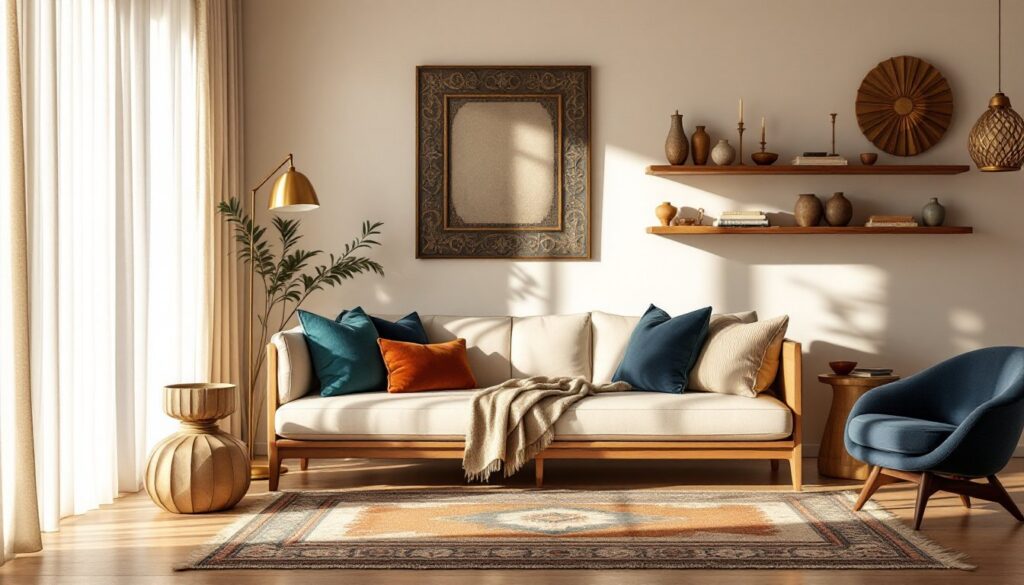
Living Room: Layer a large neutral jute or wool rug with a smaller patterned Kilim or Berber runner. Position a low wooden sofa or daybed as the anchor, dress it with cream linen throws and jewel-toned pillows, and flank it with a carved wood side table and brass floor lamp. Add a geometric patterned accent chair in indigo or emerald, and hang framed textile art or carved wood mirrors on the walls. Include ceramic vessels on floating shelves and a brass lantern as lighting accent.
Bedroom: Paint one wall in a rich jewel tone, deep teal, sapphire, or burgundy, and keep others neutral. Use a traditional wooden bed frame with carved details or simple lines, dress the bed with white or cream linens and woven throw blankets, and layer the floor with a large base rug and decorative runner. Add brass or copper bedside lamps, a carved wood mirror, and small ceramic or metal decor pieces on the nightstand and dresser.
Kitchen: A neutral kitchen with a bold geometric zellige tile backsplash feels modern and authentically Moroccan. Open shelving displaying ceramic bowls, brass serving pieces, and natural fiber baskets keeps the aesthetic. A Moroccan rug runner defines the kitchen’s work zone. Hanging pendant lights in pierced brass add warmth and drama.
Entry/Hallway: A statement Moroccan rug, framed geometric art, and hanging brass lantern immediately set the tone. Include a carved wood console table for keys and decor, and textile wall hangings for softness.
The key across all rooms is restraint and intentionality. Choose quality pieces that tell a story rather than filling space. Mix textures, layer rugs and textiles, use warm lighting, and balance bold accents with calm neutrals. Modern Moroccan design feels collected, warm, and lived-in, not staged or overwrought.
Making Modern Moroccan Work for Your Home
Modern Moroccan interior design succeeds when it honors the craft and warmth of its roots while respecting the clarity and functionality of contemporary living. Start with one statement piece, a bold rug, a jewel-toned accent wall, or a carved wooden furniture piece, and build thoughtfully from there. Quality and intention matter more than quantity. This isn’t a style that happens overnight or from a single store trip: it’s built through layering, thoughtful sourcing, and a genuine appreciation for the artistry behind each piece. When done right, your home feels vibrant, welcoming, and undeniably personal.