Traditional southern interior design carries the warmth of generations, a blend of plantation heritage, refined craftsmanship, and welcoming hospitality that feels both timeless and lived-in. Unlike trendy design movements, the southern aesthetic has remained rooted in functionality, comfort, and a deep respect for architectural history. Whether someone is restoring a historic home or simply wants to infuse their space with that distinctive regional character, understanding the core elements makes the process straightforward. This guide breaks down the defining features of traditional southern interiors, from color choices to furniture selections, so homeowners can layer in authentic southern design without feeling like they’ve stepped into a museum.
Key Takeaways
- Traditional southern interior design emphasizes warm, earthy color palettes—creams, whites, soft grays, and muted accent colors drawn from nature—that reflect heat and create an inviting, lived-in atmosphere.
- Authentic southern furniture prioritizes solid wood construction in mahogany, walnut, and pine with classical lines, generous proportions, and graceful aging rather than ornate carvings or modern minimalism.
- Rocking chairs, deep seating, and rolling arms are non-negotiable elements of southern homes that encourage gathering and practical comfort over fussy, decorative pieces.
- Preserve or restore original architectural details like crown molding, wainscoting, hardwood floors, and fireplaces, as these elements define southern character more than paint color alone.
- Layer textiles generously using linen, cotton, and wool in subtle patterns like checks and toiles, paired with floor-to-ceiling curtains and strategically placed throw pillows and rugs.
- Homeowners can achieve traditional southern interior design affordably by incrementally upgrading paint, sourcing quality used furniture, improving window treatments, and selectively adding architectural details without requiring a complete renovation.
The Essential Color Palette of Traditional Southern Interiors
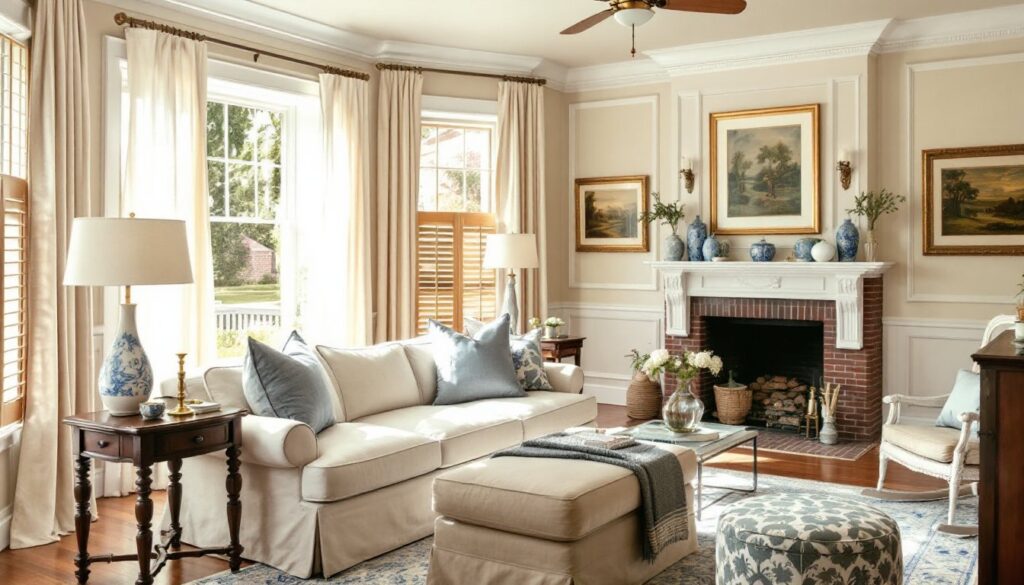
Traditional southern homes lean on a warm, earthy foundation anchored by creams, whites, warm grays, and soft neutrals. These light base colors reflect heat and maximize natural light, a practical choice in warm climates, while creating an airy backdrop that feels inviting rather than sterile.
Accent colors draw from nature: soft sage greens, dusty blues, warm terracottas, and muted golds appear in trim, shutters, or accent walls. Think less “primary color pop” and more “faded fabric found in grandmother’s sitting room.” A room might feature crisp white walls with soft blue-gray shutters and warm beige upholstery, creating depth without clashing.
Red, particularly brick red or burgundy, shows up on front doors, in fabrics, or as an interior accent, echoing both the region’s clay-based architecture and historical textile dyes. The key is restraint: these colors appear as highlights, not dominant walls. Warm metallics like brass and bronze replace chrome or stainless steel, tying to the region’s antebellum hardware tradition. Avoid stark whites or pure grays that read as contemporary: southern palettes embrace warmth and slight imperfection.
Furniture Styles That Define Southern Homes
Southern furniture prioritizes solid wood construction, mahogany, walnut, and pine, with clean, classical lines rather than ornate carving. Four-poster or sleigh beds anchor bedrooms: simple tables with turned legs fill sitting areas. Pieces often show their age gracefully, with patina and minor wear adding authenticity rather than signaling poor quality.
Upholstered furniture tends toward generous proportions with rolled arms and loose cushions. A sofa isn’t trim and minimal: it’s a place to sink in. Slipcovers in neutral linen or cotton are common, allowing easy cleaning while maintaining that lived-in feel. Wicker and rattan appear in sunrooms and porches, particularly in coastal southern interiors.
Creating Welcoming Living Spaces with Classics Like Rocking Chairs and Deep Seating
The rocking chair is non-negotiable in southern design, it appears on porches, in bedrooms, and sometimes indoors. Beyond nostalgia, rockers offer practical comfort and encourage gathering. Pair them with side tables for drinks or books. Deep seating pieces, overstuffed armchairs, sectionals with sink-in cushions, create informal conversation areas where people naturally linger. Avoid fussy decorative furniture: southern classics work hard and look good doing it. Layer in ottomans, pouffes, and low tables that double as footrests or coffee surfaces, encouraging relaxation without pretense.
Architectural Elements and Details Worth Preserving
Traditional southern homes feature specific architectural bones that shape interior design. Crown molding, wainscoting, and chair rails appear throughout, creating visual interest and breaking up wall planes. If a home has original woodwork, preservation or careful restoration becomes a priority, these elements define the space more than any paint color.
Ceiling fans with wooden blades serve both aesthetic and practical purposes, cooling spaces while maintaining period accuracy. Hardwood floors, often oak, heart pine, or southern longleaf pine, anchor rooms and age beautifully. If replacing flooring, reclaimed wood or quality reproductions maintain authenticity.
Mantelpieces, often crafted from marble or cast stone, anchor fireplaces and become display galleries for artwork, ceramics, and family photos. Fireplaces themselves, whether working or decorative, are central gathering points. If a home lacks original architectural details, strategic additions like beadboard wainscoting in a bathroom or simple crown molding can signal southern character without feeling forced. Avoid modern minimalist trim: southern details have substance and shadow.
Textiles, Patterns, and Decorative Accents
Southern interiors layer textiles generously, linen, cotton, and wool in subtle patterns like checks, toiles, damasks, and stripes. Window treatments feature floor-to-ceiling curtains in solid colors or muted prints, often paired with shutters. Swags, valances, and layers add formality in dining and living areas: bedrooms may show softer, simpler dressing.
Rugs ground rooms and soften hard flooring. Wool rugs in cream, muted blues, or geometric patterns are classic: layering smaller rugs on top adds texture. Throw pillows on upholstered pieces introduce color and pattern without overwhelming, a sofa might have neutral solid cushions with two patterned accent pillows.
Decorative accents include brass candlesticks, oil lamps, ceramic pitchers, and family portraits arranged thoughtfully rather than scattered randomly. Collections of blue-and-white pottery or antique glassware displayed on shelves or open cabinetry add personality. Artwork tends toward botanical prints, landscape paintings, or portraits, nothing ultra-modern or abstract. Fresh flowers in ceramic or glass vessels appear naturally, particularly in foyers and dining areas.
Achieving the Look Without a Complete Renovation
A complete southern interior redesign requires significant investment and time, but homeowners can layer in authentic character incrementally. Start by painting walls in a warm cream or soft neutral, which immediately lightens and refreshes spaces. A gallon typically covers 350–400 square feet: budget for two coats plus primer.
Source foundational pieces gradually. Quality used furniture shops, estate sales, and online marketplaces often stock solid wood pieces at fraction of new prices, a mahogany sideboard or walnut side table gains authenticity through age. Avoid furniture that looks “shabby-chic” by design (intentionally distressed reproductions): southern pieces earn their character.
Introduce window treatments thoughtfully. Rather than replacing all windows, upgrade curtains and shutters: linen panels in cream or soft blue-gray, wooden plantation shutters on key windows, or simple Roman shades. These changes cost far less than architectural work and immediately shift a room’s character.
Add architectural details selectively. Crown molding in a bedroom or wainscoting in a bathroom signals authenticity without overwhelming. If original hardwoods exist beneath carpet, refinishing them often costs less than new installation. Layer textiles, throw blankets, pillows, and runners, which are affordable, replaceable, and allow seasonal refreshing. Display meaningful collections and family pieces rather than buying decorator items, which keeps the space personal and genuine.
Conclusion
Traditional southern interior design succeeds because it balances beauty with livability, honoring the past without imprisoning spaces in it. The approach values quality materials, honest craftsmanship, and the comfort of things worn with grace. By understanding the color palette, furniture priorities, architectural bones, and textile traditions that define southern interiors, homeowners can thoughtfully weave these elements into their own spaces, whether that means full restoration or subtle, layered updates over time.