
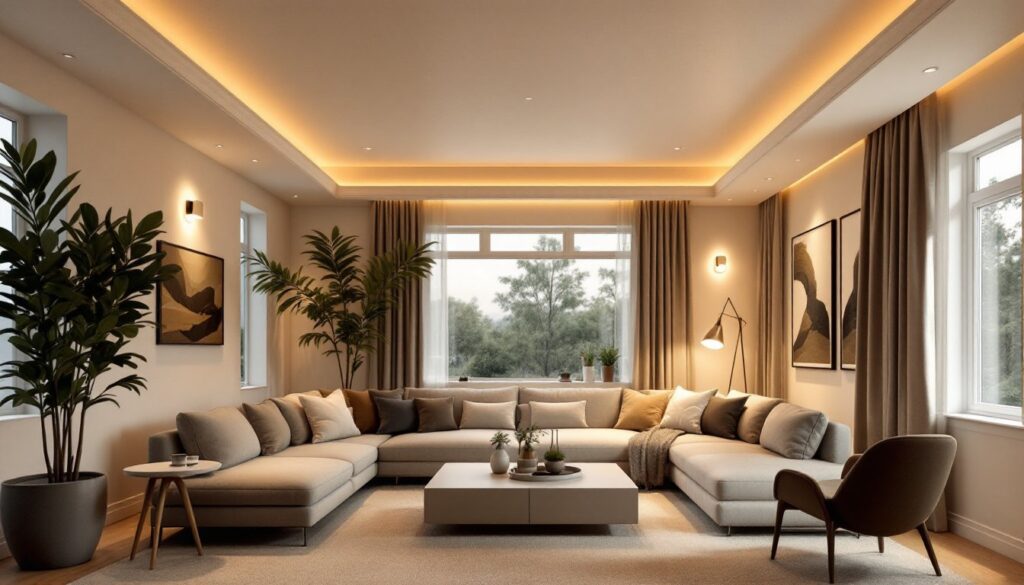
Ambient lighting forms the foundation of any well-designed interior. Unlike task lighting focused on a desk or accent lighting highlighting artwork, ambient lighting provides general illumination throughout a room, the baseline that makes a space livable and welcoming. In 2026, layered lighting design has become the standard for homeowners looking to balance functionality with mood. Getting it right means understanding fixture types, color temperature, brightness levels, and how ambient light works alongside other lighting layers. This guide walks through practical steps to assess, install, and optimize ambient lighting in any home without needing a licensed electrician for basic upgrades.
Key Takeaways
- Ambient lighting interior design creates a comfortable foundation by providing even, general illumination that reduces shadows, prevents tripping hazards, and makes rooms feel larger and more inviting.
- Modern LED ambient fixtures reduce energy consumption by 75–80% compared to incandescent bulbs, and dimmable options allow you to adjust brightness and mood throughout the day.
- Proper fixture selection depends on ceiling height and room size—flush-mounts for 8-foot ceilings, recessed lighting for a minimalist look, and wall sconces to free ceiling space in bedrooms and bathrooms.
- Use warm white color temperatures (2700–3000K) for living areas and bedrooms, and calculate lumens based on room size—typically 1,500–3,000 lumens for a 200 sq ft living room—to avoid under- or over-lighting.
- Layering ambient lighting with task and accent lighting creates depth and functionality, but all three types must use compatible color temperatures to avoid a disjointed feel.
- Common installation mistakes like insufficient coverage, incompatible dimmers, and ignoring wall reflectance can undermine your ambient lighting design, so plan fixtures carefully and consult an electrician for complex wiring or circuit work.
What Is Ambient Lighting and Why It Matters
Ambient lighting is the soft, general illumination that fills a room evenly, reducing harsh shadows and dark corners. It’s different from task lighting (overhead desk lamps, under-cabinet kitchen strips) and accent lighting (picture lights, wall washers on artwork). Think of ambient light as the room’s baseline, the glow you get when you walk in and want to see comfortably without straining your eyes.
Why does it matter? A room lit only by task lighting feels fragmented and uninviting. A room without enough ambient light feels cold or incomplete, even if accent lights are beautiful. Proper ambient lighting creates psychological comfort, makes spaces feel larger, and sets the tone for how a room functions throughout the day. In living rooms, bedrooms, and kitchens, the right ambient layer allows you to perform daily activities safely while supporting the mood you want to create. Building codes also require minimum light levels in certain spaces (like bedrooms and kitchens), making adequate ambient lighting both a design choice and a safety requirement.
The Key Benefits of Ambient Lighting in Your Home
Proper ambient lighting offers several practical advantages beyond aesthetics.
Improved Safety and Navigation. Well-lit rooms prevent tripping hazards, especially on stairs and in hallways. Consistent illumination helps residents move confidently through the home at any hour.
Energy Efficiency. Modern LED ambient fixtures use 75–80% less energy than incandescent bulbs, lowering electricity costs over time. A single dimmable LED ceiling fixture or wall sconce can replace multiple older fixtures.
Flexibility and Mood Control. Dimmable ambient lighting adapts to time of day and activity. Morning preparation calls for brighter light: evening wind-down benefits from softer illumination. This flexibility is impossible with fixed, task-only lighting.
Visual Space Expansion. Gentle, even ambient light makes rooms feel more spacious by eliminating the cave-like feel of dark corners. This is especially valuable in smaller homes or basement spaces.
Enhanced Accent and Task Lighting. Ambient light provides context for other layers. A well-lit living room with complementary ambient light makes accent lighting on artwork pop without creating contrast glare. Task lighting on a kitchen counter works better against a foundation of ambient light rather than isolated pools of brightness.
Types of Light Fixtures for Ambient Lighting
Several fixture types work well for ambient lighting, and the best choice depends on ceiling height, room size, and existing wiring.
Ceiling Flush-Mounts and Semi-Flush Fixtures. These install directly against (or a few inches below) the ceiling. Flush-mounts work in rooms with 8-foot ceilings where hanging fixtures would obstruct headroom. Semi-flush models drop 4–12 inches and distribute light more widely, making them ideal for hallways and bedrooms. They’re straightforward to install if you’re replacing an existing fixture.
Recessed Lighting (Downlights). Recessed fixtures mount inside the ceiling cavity, offering a clean, minimalist look. Standard spacing is 4–6 feet apart for even coverage. Installation requires cutting ceiling holes and working with ceiling joists, doable for confident DIYers, but hiring an electrician saves time and ensures proper box installation.
Chandeliers. Traditional and modern chandeliers provide ambient light while serving as focal points. They work best in entryways and dining rooms with higher ceilings (9 feet or more) to avoid head-bumping hazards.
Wall Sconces. Pairs of sconces flanking a mirror or sofa offer ambient light while freeing ceiling space. They’re ideal for bathrooms, bedrooms, and accent walls. Installation involves running wire through walls, a bigger DIY undertaking but manageable with basic electrical knowledge.
Track Lighting. While often used for accents, multi-head track fixtures with diffusers can provide ambient light. They’re flexible and easier to install than recessed fixtures because wiring mounts to the ceiling surface.
Choosing the Right Color Temperature and Brightness
Two technical specs matter: color temperature (measured in Kelvin) and brightness (lumens).
Color Temperature ranges from warm (below 3000K, reddish-yellow) to cool (above 4000K, bluish-white). For ambient lighting, 2700–3000K (warm white) is standard in living areas, bedrooms, and kitchens where you want inviting, natural tones. 4000K (neutral white) suits offices, bathrooms, and spaces where color accuracy matters. Avoid cool-white 5000K+ for ambient lighting unless you’re designing a modern, clinical look.
Brightness (Lumens) determines how much light reaches the room. A typical living room (200 square feet) needs roughly 1,500–3,000 lumens of ambient light total. Smaller bedrooms (100 sq ft) need 800–1,200 lumens. Kitchens often require 3,000–4,000 lumens because food prep demands visibility. Don’t confuse wattage with brightness, a 9-watt LED bulb can output 800 lumens, equivalent to a 60-watt incandescent.
Pro tip: Buy one dimmable LED bulb and test it in an existing fixture before committing to a whole room. Dimmable bulbs let you dial brightness to taste and shift perceived color temperature slightly, solving over- or under-lighting mistakes after installation.
Layering Ambient Lighting With Task and Accent Lights
The magic of interior lighting is layering, combining ambient, task, and accent light to create depth and functionality.
Ambient provides the baseline glow. Task lighting (desk lamps, kitchen undercabinet strips, reading lights) handles detailed work where you need focused brightness. Accent lighting (picture lights, wall washers, uplighting on plants) adds visual interest and draws the eye to architectural features or art.
In a kitchen, for example, overhead recessed fixtures supply ambient light, pendant lights above the island offer task illumination for meal prep, and perhaps warm LED strip lights under cabinets add accent warmth and task light to countertops below.
When layering, ensure all three types use compatible color temperatures (all warm white or all neutral white). Mixing 2700K ambient with 5000K task light creates an unsettling, disjointed feel. Also, avoid letting task or accent light overwhelm ambient light, the ambient layer should dominate so task and accent additions feel intentional, not like separate islands of light.
Common Mistakes to Avoid When Installing Ambient Lighting
DIYers often stumble on a few predictable errors.
1. Insufficient Coverage. A single ceiling fixture in a large bedroom leaves corners dark. Calculate lumens per square foot, then size fixtures accordingly. Two smaller flush-mounts beat one under-powered fixture.
2. Forgetting Dimmer Compatibility. Not all LED bulbs work with every dimmer switch. Check the bulb’s dimming range before buying. A non-dimmable LED plugged into a dimmer circuit flickers or doesn’t turn on, frustrating and wasteful.
3. Neglecting Ceiling Height. A chandelier hung 60 inches above a dining table (a typical target) will feel low in a 9-foot ceiling but might clip heads in an 8-foot room. Always measure and mock up with tape before installation.
4. Mixing Fixture Types Haphazardly. Combining recessed lights, sconces, and a chandelier works only if they’re intentionally spaced and balanced. Scattering fixtures randomly creates dead zones and glare.
5. Skipping Circuit Capacity Checks. New fixtures draw power from your circuit. If you’re adding significant ambient lighting, ensure the circuit isn’t overloaded (typically 1,500 watts per 15-amp circuit at 120V). If unsure, call an electrician to verify or add a dedicated circuit.
6. Ignoring Wall Reflectance. Light paint and surfaces bounce ambient light: dark paint absorbs it. A room with dark walls needs brighter fixtures than one painted cream or white to achieve the same perceived brightness.
Conclusion
Ambient lighting is the backbone of functional, inviting interior design. By understanding fixture types, color temperature, brightness levels, and how layering works, you’re equipped to assess and improve lighting in any room. Start by evaluating current ambient light, identify gaps or imbalances, and choose fixtures that match your space’s proportions and style. When in doubt about wiring or circuit capacity, bring in a licensed electrician, safety isn’t a place to cut corners. With the right ambient foundation in place, your home will feel more spacious, comfortable, and visually complete.